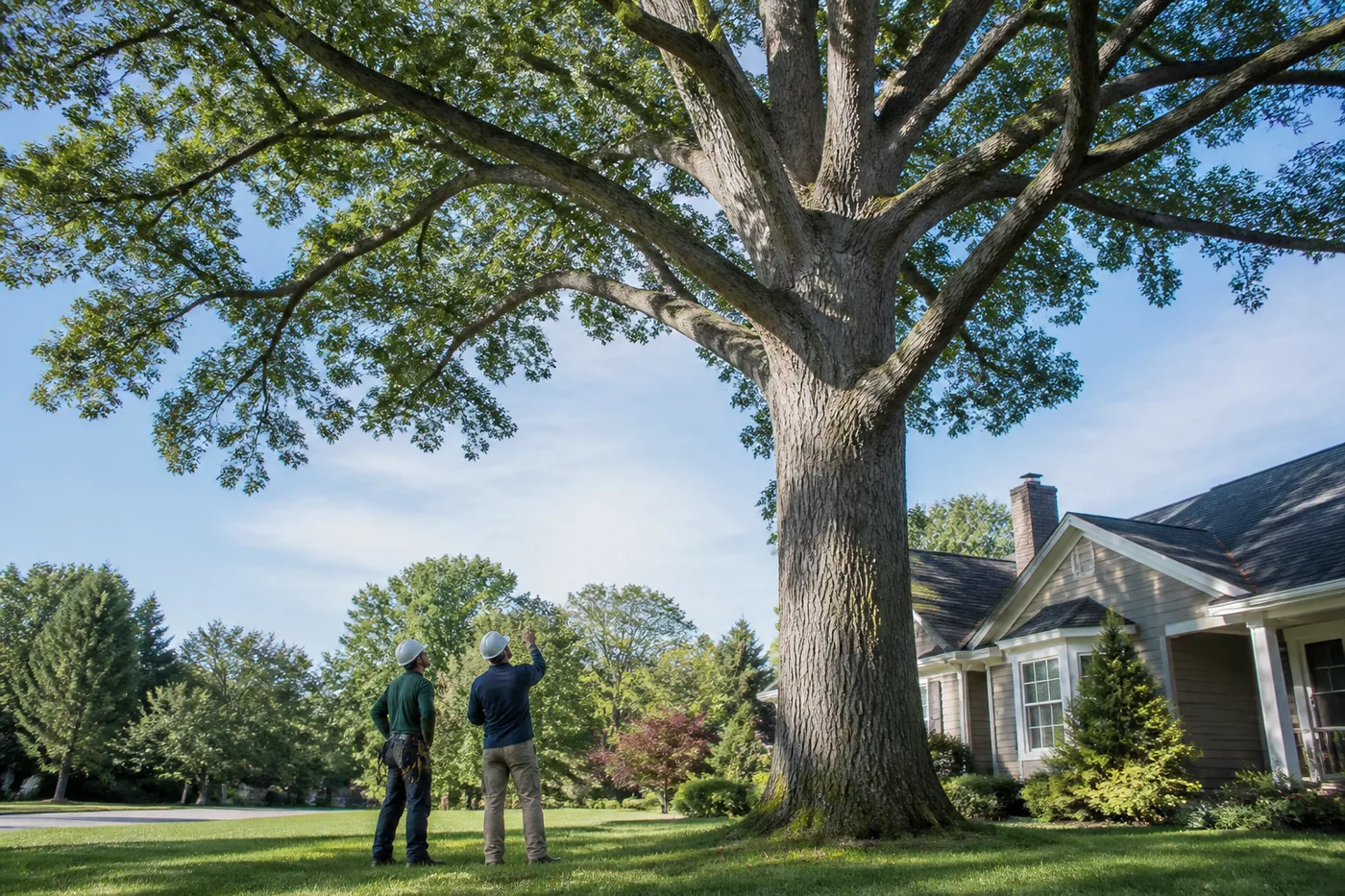
Large Tree Removal Costs Depend On The Whole Job
Removing a large tree often costs more than removing a small backyard tree because the crew needs more time, equipment, and planning. A broad planning range may be several hundred to several thousand dollars, but there is no single price that fits every property. Tree height, trunk size, species, access, nearby structures, and cleanup all change the estimate.
The best way to think about the price is to separate the tree itself from the work required to lower it safely. A large tree in an open yard may be straightforward for an experienced crew. A similar tree over a roof, fence, driveway, or power line may need ropes, cranes, traffic control, or extra workers. If you are still deciding whether removal is the right service, read our guide on when tree removal makes more sense than trimming before comparing prices.
What Makes A Large Tree More Expensive To Remove
Height and trunk diameter are two of the first details a tree company will consider. A taller tree has more limbs to manage, while a thick trunk creates heavier pieces that need to be cut, lowered, moved, and processed. A tree with several large leaders can also take longer than a single straight trunk, even when the total height looks similar.
The work becomes more complex when the tree is close to a home or another target. Crews may need to lower branches instead of letting them fall, protect siding and landscaping, move equipment through a narrow gate, or use a bucket truck. Steep ground, wet soil, limited parking, and blocked access can raise labor and equipment costs too. Our guide to tree distance from a house explains why location matters well before removal day.
Tree condition can affect the price as well. A dead, hollow, split, or storm-damaged tree may be less predictable to climb and cut. In those cases, a company may need additional safety planning or specialized equipment. A tree that is already leaning or moving at the roots should be treated as a safety concern, not as a do-it-yourself project.
- Tree height, trunk diameter, number of main limbs, and overall weight.
- Distance from homes, garages, fences, driveways, sidewalks, and utility lines.
- Access for trucks, chippers, lifts, cranes, and workers.
- Whether the tree is healthy, dead, split, leaning, or damaged after a storm.
What Your Tree Removal Estimate May Include
A written estimate should explain what happens from the first cut through final cleanup. Basic removal may include cutting the tree into manageable sections, lowering or dropping those sections, feeding branches into a chipper, and hauling away logs or brush. Some companies leave wood chips or firewood on site unless you request removal, so ask before accepting the price.
Stump grinding is often a separate service. It removes the visible stump below grade but does not remove every root. If you want the area ready for grass, a garden, or a new planting, ask whether the quote includes grinding depth, chip removal, fresh soil, and leveling. Our article on how stump grinding works can help you decide which part of the cleanup you need.
Also ask whether the estimate includes permits, travel, emergency response, protection for nearby property, and sales tax. A low quote may leave out hauling or stump work that another company includes. Comparing the scope line by line gives you a more useful answer than comparing the headline price alone.
How To Compare Large Tree Removal Quotes
Try to collect at least two or three written estimates when the situation is safe and there is time to compare. Each company should identify the tree, describe the planned removal method, and list what will happen to the branches, trunk wood, and stump. Ask whether the crew is insured and whether the estimate changes if hidden damage or difficult access is found after work begins.
Do not choose a company based only on the lowest number. A very low bid may mean the company has not included cleanup, is not planning for the full site risk, or does not carry the coverage you expect. Look for a clear scope, realistic timing, professional communication, and proof that the crew understands how to protect your property.
If a tree service recommends removal but another suggests trimming, ask each company to explain the condition they are addressing and what could happen if the tree stays. Our guide on signs a tree may need removal can help you prepare better questions before you sign an estimate.
Insurance And Storm Damage Questions
If a large tree fell during a covered storm and damaged your home or another covered structure, your homeowners insurance may help with some removal and repair costs. Coverage depends on your policy, the cause of the damage, where the tree landed, and your deductible. Do not assume that a tree in the yard will be covered just because it is large or dangerous.
Take photos from a safe distance and ask your insurer what they need before non-emergency cleanup begins. If the tree is touching a power line, blocking a road, or threatening a structure, focus on safety and follow instructions from the utility, emergency officials, and a qualified tree service. For more detail, read our guide to insurance and tree removal.
When you are ready to compare local help, EasySpruce makes it easier to review tree service companies in one place. You can also list your tree service company if you serve homeowners who need removal, trimming, stump work, or storm cleanup.