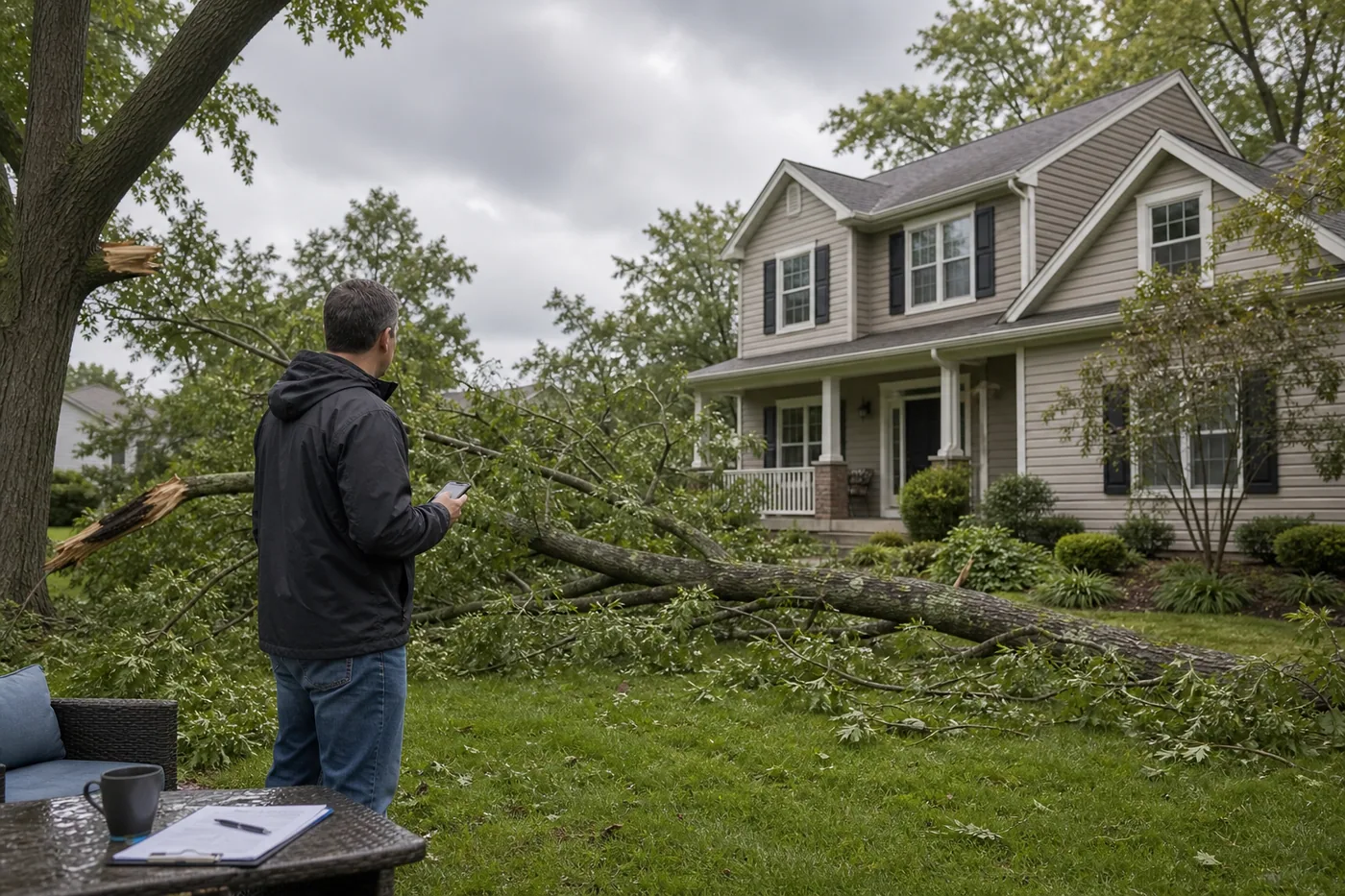
The Short Answer Depends On The Damage
Homeowners insurance may cover tree removal, but it does not cover every tree or every situation. The answer usually depends on what caused the tree to fall, where it landed, and what property it damaged. Your policy language and deductible matter too, so treat general guidance as a starting point rather than a promise of payment.
Many policies are designed to cover sudden damage from a covered event, such as wind, lightning, or a named storm. If a tree falls because of one of those events and damages your roof, house, garage, or another covered structure, the policy may help pay for repairs. It may also include a limited amount for removing the tree when the removal is part of the covered loss.
A tree that falls in an open yard without damaging covered property is often treated differently. Some policies do not pay to remove it from the lawn, or they may offer only a small separate limit. Before you schedule expensive work, call your insurer and ask what part of the cleanup they want documented or inspected.
When Tree Removal Is More Likely To Be Covered
Coverage is more likely when the tree caused direct damage to something your policy protects. Examples may include a tree through the roof, a branch that damaged a garage, or a fallen trunk blocking a driveway after a covered storm. The exact rules vary, but the connection between the event, the tree, and the damaged property is usually important.
The cause also matters. A healthy tree that falls in a sudden storm is easier to connect to a covered event than a tree that had been rotting for years. Some policies have rules about neglect or maintenance, and an insurer may ask whether the homeowner knew the tree was unsafe. That does not mean a claim will automatically be denied, but it does mean photos and clear records can help explain what happened.
If the tree is leaning or split after a storm, keep people away and take photos from a safe distance. Our guide to spotting danger in a leaning tree can help you think through immediate safety concerns while you wait for instructions from your insurer or a qualified tree service.
Common Situations That May Not Be Covered
Insurance often does not pay simply because a tree needs to come down. A dead, diseased, or visibly failing tree may be considered a maintenance issue if it falls without causing covered damage. Removing a tree before it falls is also usually a property maintenance expense, unless a specific endorsement or policy provision says otherwise.
There can be special rules when a tree falls from a neighbor's property. Your policy may respond to damage to your home, while the neighbor's insurance may not pay unless the neighbor was negligent under the facts and local law. Do not assume that the tree's location before the storm decides who pays. Save photos, avoid making accusations, and ask each insurer how they want the claim handled.
A tree that only damages a fence, shed, sidewalk, or landscaping may have different limits or exclusions than a tree that damages the main house. If the estimated cleanup cost is close to your deductible, ask for the likely covered amount before filing. Our article on trees growing too close to a house also explains why clearance and location matter before a storm happens.
What To Do Before Hiring A Tree Service
Start with safety. Do not walk under a hanging limb, touch a tree near a power line, or use a chainsaw on a large fallen tree. If the home is unsafe or the damage is blocking an emergency route, follow local emergency guidance first. A tree company can often stabilize or remove the hazard, but the crew needs to know about power lines, structures, and other risks before work begins.
Next, document the scene. Take wide photos that show the tree and the property, then take closer photos of broken limbs, roof damage, lifted roots, and anything the tree struck. Write down when the storm happened and when you first noticed the damage. Ask your insurer whether an adjuster should inspect the site before cleanup, and keep invoices, estimates, and receipts.
Ask the tree company for a written estimate that separates emergency work, removal, hauling, stump work, and repairs. A local listing such as Simply Trees, LLC in Sarasota can give you one example of how a tree service business presents its services, but confirm that any company you hire is properly insured for the work.
Questions To Ask Your Insurance Company
Ask whether the cause of the damage is covered, whether tree removal has a separate dollar limit, and whether the limit applies per tree or per event. Also ask whether the policy covers hauling and cleanup, temporary protection for the roof, and damage to fences or other structures. Request a claim number and write down the name of the person who gives you instructions.
If your insurer says the work can begin, ask what photos, estimates, and receipts they need. Some companies may approve emergency stabilization first and review the rest later. Do not wait to protect the home from additional damage, but keep the work focused on making the property safe and preventing more loss. Your policy may require reasonable steps to limit further damage.
Insurance questions are specific to your policy, state, and claim facts. A tree service company can help with the physical hazard, but the insurer decides coverage. If you own a tree service company and want homeowners to find your business while comparing local help, you can list your company on EasySpruce.