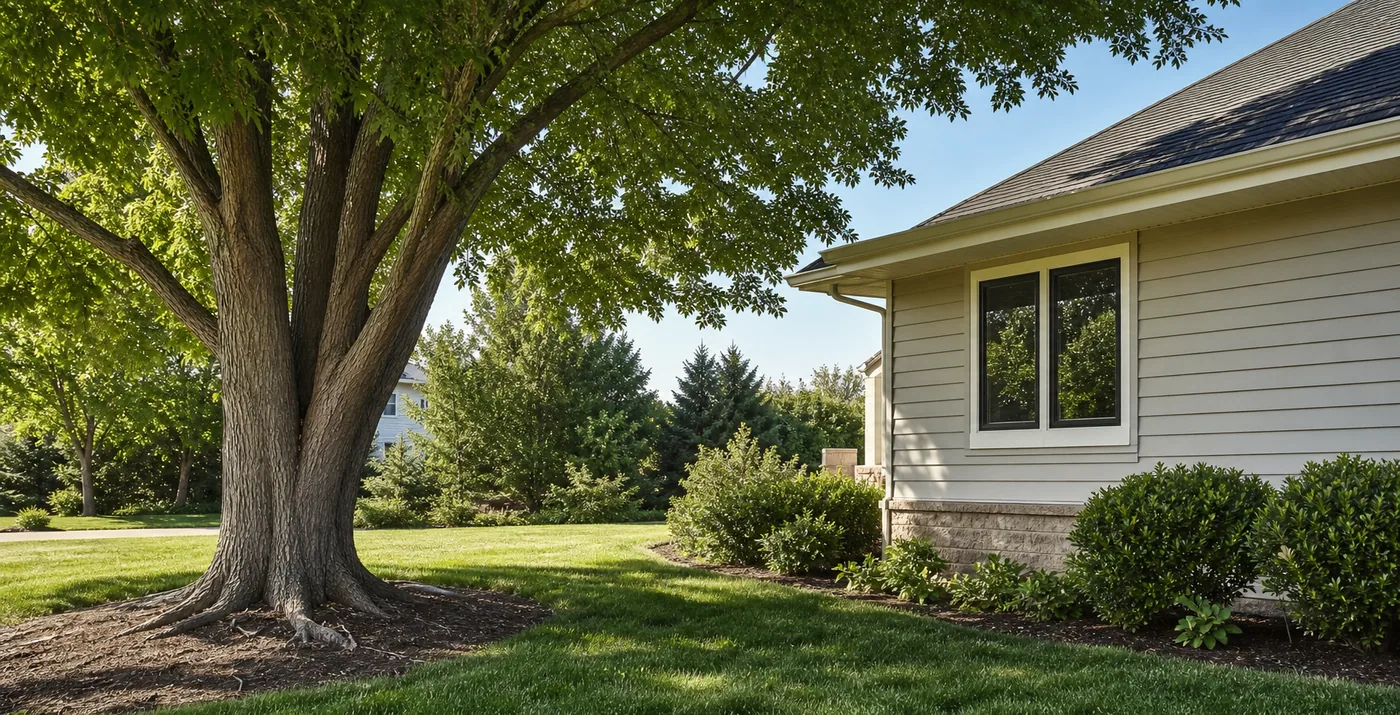
There Is No One Perfect Distance
A tree can grow close to a house and still be safe, but the right distance depends on the tree. A small ornamental tree is very different from a large oak, maple, pine, or palm. The mature size matters more than the size on planting day. A tree that looks tiny now may spread wide roots and heavy limbs later.
A simple way to think about it is this: the bigger the tree will become, the more room it needs. Large shade trees usually need more space from the roof, siding, driveway, pipes, and foundation. Smaller trees can often live closer, as long as branches are not rubbing the house and roots are not lifting hard surfaces.
If you are planting a new tree, look up its mature height and mature spread before choosing the spot. The tag at the nursery may show how wide the canopy can become. That width is a better guide than the size of the young tree in the pot. A good planting spot gives the future tree enough room without forcing constant trimming later.
Look At The Canopy First
Start by looking up. Branches should not scrape the roof, press on gutters, touch windows, or hang low over the chimney. Light shade over a roof is not always bad, but direct contact can wear shingles, hold moisture, and give animals an easy path onto the house. If limbs are already touching, the tree may need careful pruning.
Also look at how much weight hangs over the house. One small branch near a gutter is not the same as several large limbs over the roof. Heavy limbs can move in wind, drop smaller branches, or break during storms. If the tree has a full canopy on the house side and very little weight on the other side, a tree service may need to look at balance, not just clearance.
Do not solve the problem by cutting random large limbs yourself. Bad cuts can hurt the tree and make future breakage more likely. If the tree is healthy and the issue is mostly clearance, a trimming plan may be enough. Our guide to trimming a neighbor's tree hanging over your property explains why careful cuts and local rules matter when limbs cross important spaces.
Roots Need Room Too
Roots are harder to judge because most of them are underground. Many tree roots grow wide and shallow, not straight down. That means a tree does not have to be right against the wall to affect nearby soil, sidewalks, patios, or drain lines. Raised pavers, cracked walkways, and exposed roots near the foundation are all signs to watch.
That does not mean every root near a house is a crisis. Roots usually follow water, air, and easier soil. The concern grows when roots are lifting hard surfaces, entering old pipes, or sitting in soil that stays very wet or very dry. If the tree also leans toward the home, compare what you see with our article on whether a leaning tree is dangerous before you decide what to do next.
Be careful about blaming a tree for every crack. Houses, patios, and walkways can move for many reasons, including age, drainage, soil type, and past construction. The tree may be part of the problem, or it may simply be near a problem that was already there. That is why photos, measurements, and a site visit are more useful than guessing from the trunk distance alone.
When A Close Tree Becomes A Problem
A close tree deserves attention when it starts affecting the house or looks unstable. Watch for branches rubbing the roof, large dead limbs over the home, cracks in the trunk, mushrooms near the base, lifted soil, or new leaning after a storm. These signs do not always mean removal is required, but they do mean the tree needs a closer look.
The location also changes the risk. A weak tree over open lawn is one thing. A weak tree over a bedroom, garage, power line, fence, or driveway is another. If you are unsure whether trimming is enough, read our guide on how to know when a tree needs removal. It can help you separate small maintenance issues from larger structure problems.
Timing matters too. If a branch is lightly touching siding on a calm day, you may have time to schedule routine trimming. If the tree has shifted after a storm, dropped a large limb, or exposed fresh roots near the house, move faster. Keep people away from the area until someone qualified can look at it.
Ask For A Site-Specific Opinion
No blog post can tell you the exact safe distance for every tree and every house. A local tree service can look at the species, trunk size, roots, soil, roof clearance, and targets around the tree. They can also explain whether the right next step is monitoring, pruning, root-zone care, or removal. If you want an example of a local listing, review Harley's Tree Service in Sarasota and note the kinds of services listed.
When you call a company, send clear photos of the whole tree, the trunk base, the roofline, and any root damage you can see. Tell them how close the tree is to the house and whether the problem is new. Ask whether the company recommends trimming, removal, or watching the tree for now. A clear answer should explain the reason, not just the price.
If you run a tree service company and want homeowners to find your business when they are comparing local options, you can list your tree company on EasySpruce for review. Homeowners often search when they are unsure how serious a close tree is. A complete listing can help them understand who handles trimming, removal, storm cleanup, and related work in their area.