Start With The Tree's Structure, Not Just The Price
Tree removal is not the first answer in every situation. In many cases, trimming can solve a problem and keep a healthy tree in place. The real question is whether the tree still has a reliable trunk, root system, and canopy that can support it safely over time. If the main structure is failing, pruning can reduce some weight, but it cannot rebuild strength that has already been lost.
A good first step is to ask what problem you are trying to solve. Are you worried about a dead limb, a branch rubbing the roof, or a tree that started leaning after storm damage? Those are different situations. EasySpruce already explains the basics of tree trimming and tree removal, and comparing those pages can help you understand whether the issue is limited or structural.
If you want a broader comparison point, the earlier post about when to remove a tree instead of trimming it walks through the same decision from another angle. That kind of cross-check is useful because the right answer is rarely about which service sounds simpler. It is about whether the tree still has a safe future on the site.
Signs The Tree Itself Is No Longer Reliable
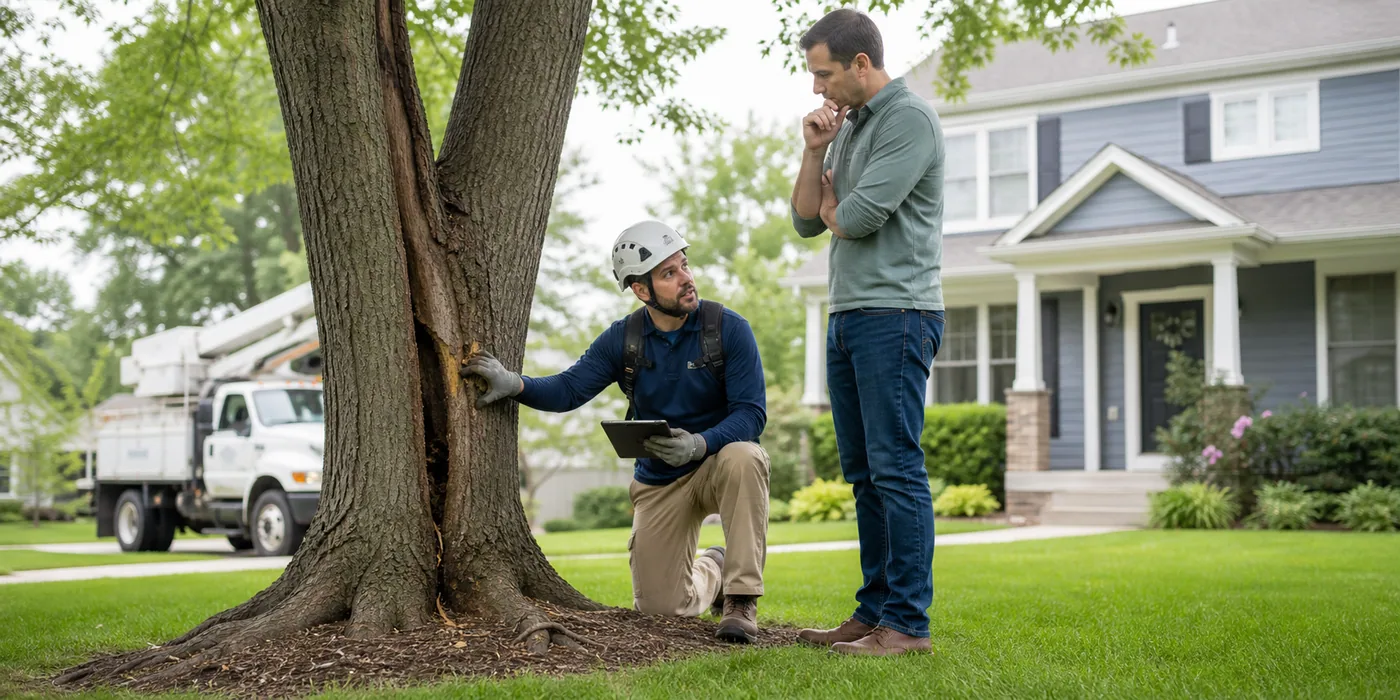
The clearest signs that removal may be needed are defects in the main parts of the tree. A split trunk, major root movement, large cavities, extensive decay, or repeated large branch failures are all signs that the tree's structure is compromised. If those problems are present, the tree may no longer be a good candidate for routine pruning because the issue is not just on the outside branches.
Decline in the canopy matters too. A mature tree with very little live growth, widespread dieback, or a rapidly thinning crown may be beyond the point where maintenance pruning will make a meaningful difference. In that situation, a reputable company should explain whether the tree can be monitored, stabilized, or safely removed. If the tree is close to a house, driveway, or walkway, the margin for error gets smaller and the recommendation should reflect that.
Storm damage often exposes a problem that was already building before the wind picked up. If a tree split, dropped a large limb, or started leaning after a storm, that does not automatically mean removal is required, but it does mean the tree needs a closer look. The earlier removal guide is useful here because it explains how to think about risk when the damage is in the main structure instead of in one isolated branch.
Know When Trimming Is Still Enough
Not every concerning tree has to come down. If the issue is limited to selected branches, pruning may be the right fix. That includes deadwood removal, branch clearance, light storm damage, or correcting limbs that are crowding a structure. In those cases, the trunk and root zone are still sound enough that the tree can remain in place after the work is done.
The key is whether the pruning has a clear purpose. If a contractor says the tree should simply be cut back hard without explaining which defect they are addressing, that should raise questions. Responsible pruning should be tied to a specific outcome, such as improving clearance, reducing a hazard, or correcting a structural imbalance. If the explanation stays vague, ask for a site-specific recommendation before you approve the work.
This is also where a service page can help you keep the conversation grounded. EasySpruce's tree trimming page outlines the kind of work that should be happening when the tree is otherwise worth keeping. If the company cannot explain how their plan fits the tree's current condition, the work may be more cosmetic than corrective.
Ask For A Recommendation You Can Defend Later
A strong estimate should tell you why removal or pruning is being recommended, not just what it will cost. That matters because tree work often becomes easier to justify after the fact if the reasoning is clear from the start. If one company says prune and another says remove, ask both to explain the defect they are prioritizing, the risk they see, and what is likely to happen if the tree stays in place.
For many property owners, the practical rule is simple: keep the tree when the defects are limited and correctable, and remove it when the structure, condition, or location creates a risk that pruning cannot responsibly manage. If you are comparing local options, EasySpruce can help you review companies and service pages before you schedule the job.
You can start from the home page if you want to browse local directory options first, then move into company pages and service guides once you have a better sense of the tree's condition. That usually leads to a better conversation with the crew and a clearer estimate on the back end.