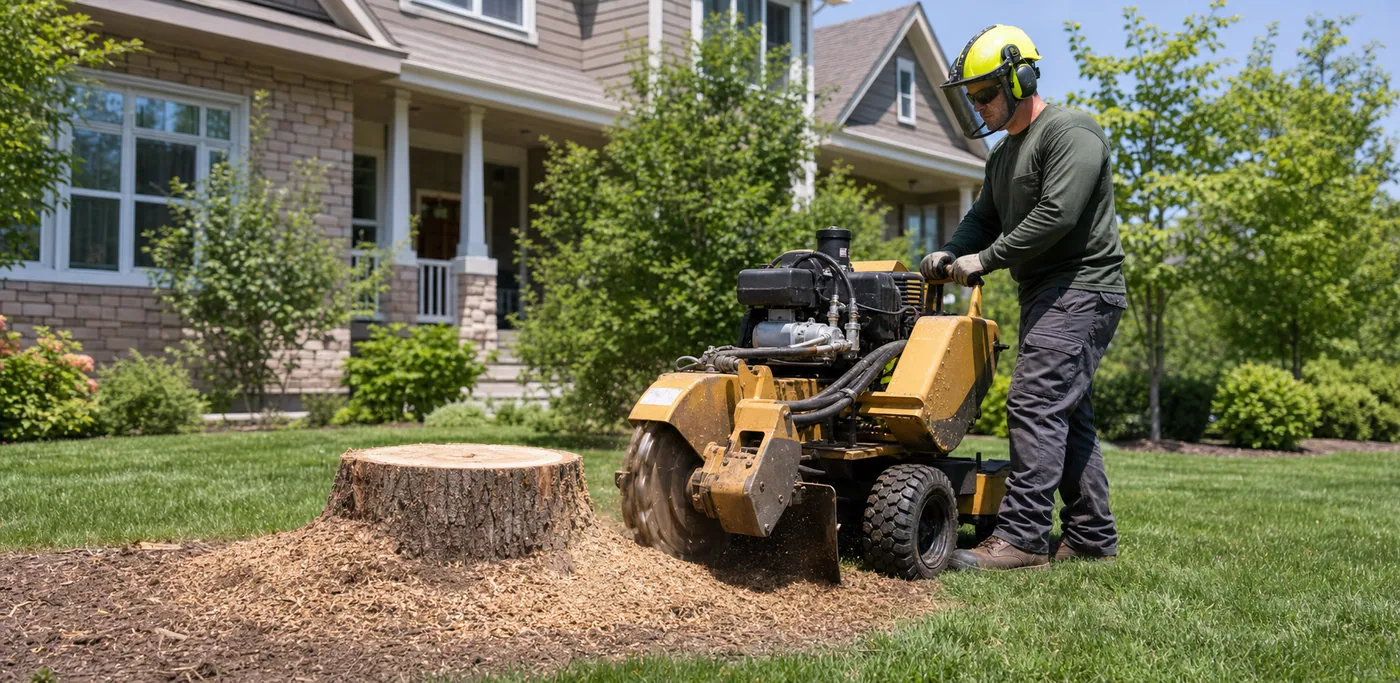
What Stump Grinding Actually Does
Stump grinding is what happens after a tree has already been removed and the remaining stump is still sitting in the yard. Instead of pulling the entire root ball out of the ground, a stump grinder chips the visible wood down below grade. That leaves the area easier to cover with soil, seed, or mulch without turning the whole yard into a major excavation site.
For many homeowners, that is the main advantage. Full stump removal can disturb a large section of lawn, especially when the tree was mature or close to a driveway, patio, or fence line. Grinding is more targeted. It deals with the part of the stump that creates the day-to-day problem while avoiding the larger disruption that comes with digging everything out.
It helps to think of it as the cleanup step that follows a bigger tree decision. If you are still figuring out whether the tree itself should come down, the guide on how to know when a tree needs removal is the better place to start. Once removal is already done, stump grinding is usually the next practical question.
How The Process Works On Site
A stump grinding visit usually begins with a quick review of the stump's size, location, and access. The crew needs to know whether the machine can get through a gate, whether the stump is close to irrigation or hardscape, and whether nearby structures limit the angle of approach. That is why a solid estimate should account for more than the stump diameter alone.
During the work, the machine's cutting wheel moves back and forth across the stump, shaving it down in layers. The operator gradually grinds the wood several inches below the surface. What remains is a pile of wood chips mixed with soil, which can either stay on site for reuse or be hauled away depending on the scope of the job.
This also explains why stump grinding is usually paired with removal rather than trimming. If the tree is still standing and the choice is not settled yet, the broader decision is closer to when you should remove a tree instead of trimming it. Grinding only becomes relevant after the trunk is already gone and the leftover stump is the part you still need to deal with.
When It Makes Sense To Schedule It
You usually need stump grinding when the stump is interfering with how you use the property. A stump in the middle of the lawn makes mowing harder, creates a tripping hazard, and keeps the yard looking unfinished. The same is true for stumps near walkways, driveways, play areas, or places where you plan to improve the landscaping.
There is also a maintenance angle. Old stumps can send up shoots, collect debris, and in some cases attract insects as the wood breaks down. That does not mean every stump becomes an urgent problem, but it does mean leaving one in place can create a longer tail of smaller issues than many homeowners expect when the tree work is first completed.
Appearance matters too. After paying for a removal, many people realize the job still does not feel finished because the stump remains as the visual reminder of the old tree. Grinding makes the site easier to reclaim. If you want help thinking through the right timing for your property, you can always contact us before scheduling the work.
What To Ask Before You Book The Job
Not every stump has to be ground immediately. If it sits far from foot traffic in a wooded area and is not affecting maintenance, waiting may be perfectly reasonable. But if you are going to schedule the work, ask what depth is included, whether cleanup is part of the quote, and whether access limitations could change the final result. Those details affect whether the area will actually be ready for the next step you have in mind.
It is also smart to ask what the company expects you to do with the space afterward. If you only want the stump out of the way, a standard grind may be enough. If you want sod, a planting bed, or another landscape feature, the crew should know that before they start. The more clearly you describe the end use, the easier it is to scope the work correctly. If you want a quick overview of what local providers typically include, the stump grinding service page is a useful comparison point before you book.
The simplest rule is that stump grinding is worth it when the remaining stump is creating a functional, cosmetic, or maintenance problem that is not likely to improve on its own. When that is the case, grinding is usually the least disruptive way to finish the job and move on with the yard.