Stay Safe And Stop The Work
If a tree service damages your roof, fence, driveway, shed, vehicle, or landscaping, focus on safety first. Ask the crew to stop work while you look at the area from a safe distance. Stay away from hanging limbs, unstable sections of tree, damaged utility lines, broken structures, and equipment that is still moving. If someone is hurt or a power line is involved, call emergency services or the utility before discussing repairs with the company.
Do not climb onto a roof, move a heavy limb, or enter a damaged structure just to take a closer photo. A qualified professional may need to make the area safe before anyone can inspect it. If the tree itself is unstable, our guide to recognizing danger in a leaning tree can help explain why people should stay clear until the risk is assessed.
Document The Damage Before Cleanup
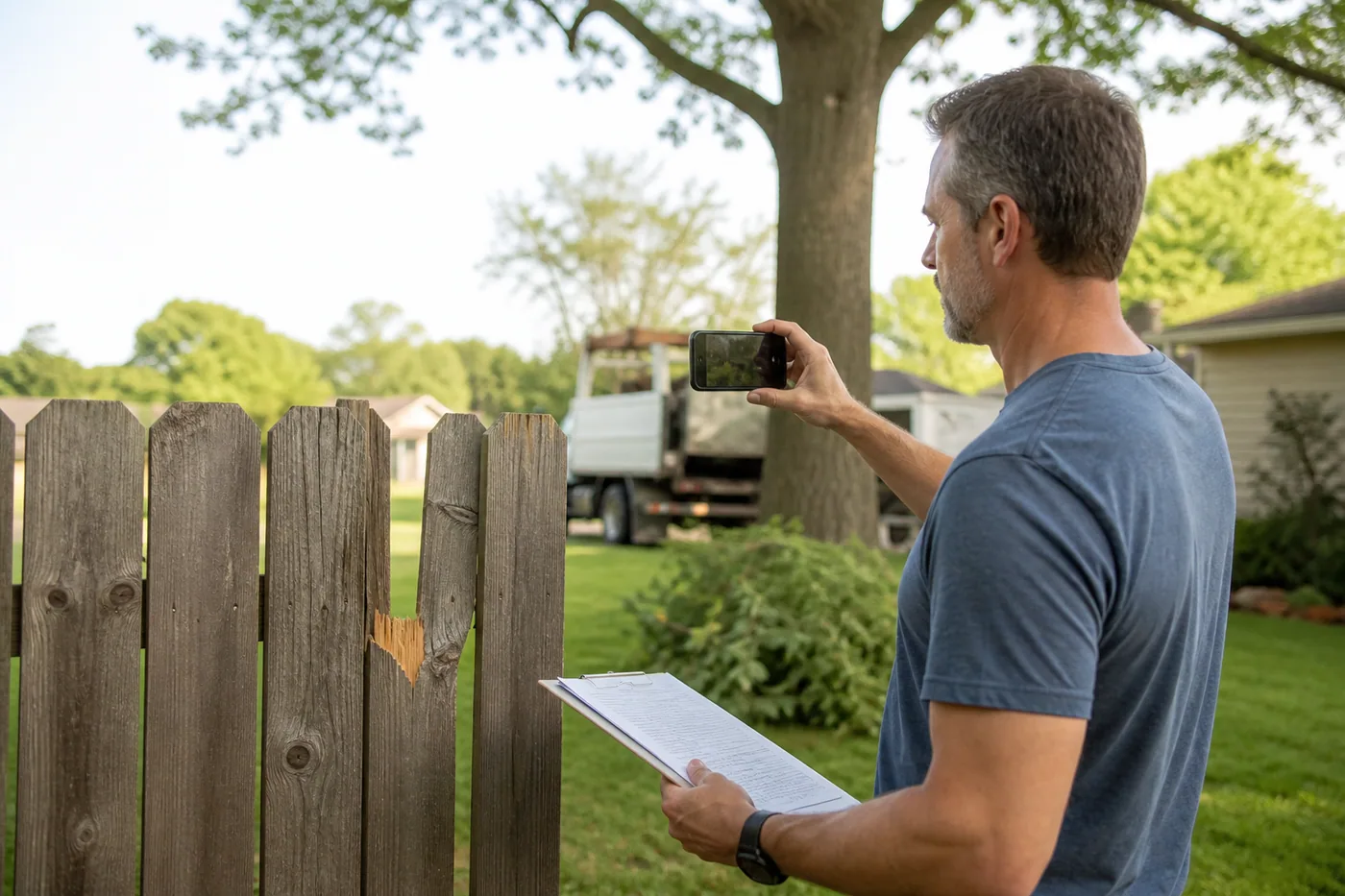
Take clear photos and video when it is safe. Photograph the full property, the damaged area, nearby tree sections, equipment placement, and any pieces of wood or branches that may show what happened. Take wide photos that show where the damage is located, then take closer photos of cracks, dents, broken boards, torn gutters, damaged plants, or tire marks. Save the original files and note the date and time.
Gather the estimate, contract, text messages, emails, invoices, proof of insurance, and any before-work photos. Write down what you noticed, who was present, what the crew said, and whether the damage appeared during cutting, lowering, hauling, or cleanup. These records can help the company, insurer, contractor, or another professional understand the sequence without relying on memory.
- Photographs and video from safe locations.
- The written estimate, contract, and final invoice.
- Messages, names, dates, and statements about the incident.
- Repair estimates and receipts for emergency protection or temporary work.
Notify The Tree Service In Writing
Contact the company promptly and describe the damage in a calm, factual message. Include when you noticed it, what appears to be damaged, and which photos or documents you have. Ask the company to send a manager or supervisor to inspect the property, and ask for the name of its liability insurer and the process for filing a claim.
Avoid making a final accusation or agreeing to a repair amount before the facts are clear. The company may need to compare the damage with the property's condition before work began. That does not mean you should delay urgent protection. If a roof is open or a structure is unsafe, ask the company and your insurer what temporary steps are authorized, and keep receipts for reasonable emergency work.
Review The Contract And Scope Of Work
Read the estimate and contract for language about property protection, access, cleanup, hidden conditions, and responsibility for damage. Check whether the company promised to protect driveways, lawns, roofs, fences, irrigation, or other nearby features. Also check whether the agreed work included hauling, stump grinding, and final cleanup. Our guide to comparing tree removal estimates explains why these details should be written down before work starts.
A contract cannot answer every question by itself, and responsibility can depend on what happened, what the company agreed to do, and local law. For example, ordinary equipment marks on a soft lawn may be treated differently from a branch that strikes a roof or a crew member who ignores a known obstacle. If the amount is large or the facts are disputed, consider asking a local attorney or consumer protection office for advice.
Contact Your Homeowners Insurance Company
Call your homeowners insurer if the damage affects covered property or you need help arranging an inspection. Explain that the damage occurred during contracted tree work and ask what documentation, estimates, and claim forms it needs. Your policy may address some types of property damage, but coverage and deductibles depend on the policy and the cause of the loss. Do not assume the insurer will automatically pay or that the tree company will automatically be responsible for every cost.
Ask before authorizing permanent repairs if the insurer wants to inspect the damage first. You can usually take reasonable steps to prevent more damage, such as covering an opening or keeping people away from a dangerous area, but confirm what the insurer considers necessary and keep your receipts. Our guide to insurance questions after tree damage provides more context about documentation and coverage limits.
Get Independent Repair Estimates
Ask qualified repair professionals for written estimates when the damage is more than a simple fix. A roofer may need to inspect a roof, a fence contractor may need to assess posts and panels, and a landscaper may need to evaluate damaged plants or irrigation. Use professionals who can describe the repair clearly and separate emergency protection from permanent replacement.
Keep the repair estimates focused on restoring the property to its prior condition. If you want an upgrade, expansion, or different material, ask the contractor to list that separately. Clear numbers help you and the tree service discuss the actual damage instead of arguing over a vague total. Do not discard damaged materials until the insurer or relevant parties have had a reasonable chance to inspect them, unless they create an immediate safety problem.
What If The Company Refuses To Help?
If the company will not respond, denies the damage without inspecting it, or offers an amount you cannot support, keep communication in writing. Send a short summary of the incident, attach key photos, identify the repair amount, and request a response by a reasonable date. Avoid threatening language and do not post private information about employees or customers while the matter is unresolved.
If direct communication fails, possible next steps may include the company's insurer, your own insurer, a local licensing or consumer protection office, mediation, small claims court, or legal advice. The right option depends on the location, contract, damage amount, and applicable rules. Our guide on warning signs when choosing a tree service can help with future hiring decisions, but it cannot replace advice about an active dispute.
Prevent Problems Before Tree Work Begins
The best time to reduce a property-damage dispute is before the crew arrives. Walk the property with the company, point out fragile features, take before photos, and agree on equipment access and protected areas. Move vehicles and loose items, mark irrigation heads, explain underground features, and ask how the crew will protect the driveway, lawn, roof, and nearby structures.
For a local example, Cedar City Tree Service in Cedar City, Utah is one EasySpruce listing you can review while comparing local options. Confirm the service area, request current proof of insurance, and use a written scope before hiring any provider. Tree service companies can also submit their business for review so homeowners can find local companies with clearer information.
Keep The Process Calm And Documented
Property damage after tree work is stressful, but a careful process can make the next steps clearer. Protect people first, document the condition, notify the company, review the agreement, contact your insurer when appropriate, and get independent repair information. Keep conversations factual and save every important record.
A company that responds quickly, reports the incident to its insurer, and helps coordinate a reasonable inspection may resolve the issue without a long dispute. If it does not, your photos, contract, messages, and repair estimates give you a stronger record for the next step.