Start With A Written Estimate
A tree removal estimate gives you more than a price. It should explain what the company saw, what work it recommends, and what you can expect on the day of the job. A clear estimate makes it easier to compare companies because you are looking at similar work instead of guessing what each number means.
Try to get a written estimate after a company sees the tree and the property. Photos can help with an early conversation, but a tree near a house, fence, driveway, sidewalk, or power line needs an in-person look. If you are still deciding whether removal is necessary, our guide to the signs a tree may need removal can help you prepare for that visit.
Make Sure Every Estimate Describes The Same Tree
Before comparing prices, confirm that each estimate is for the same tree and the same level of work. The document should identify the tree by location, such as the large oak beside the driveway or the dead pine behind the garage. If there is more than one tree, ask the company to list each one separately instead of giving you one unclear total.
The estimate should also describe the planned method. It may mention climbing, a bucket truck, rigging, a crane, or sections lowered by rope. You do not need to choose the equipment yourself, but you should understand why the company expects to use it. A tree removal estimate that ignores nearby structures or difficult access may not reflect the full job.
- Which tree or trees will be removed.
- The planned removal method and equipment.
- The areas the crew will protect during the work.
- The expected schedule and conditions that could cause a delay.
Compare The Work Included In The Price
A low estimate may leave out work that another company includes. Read each estimate line by line and look for tree removal, branch cutting, log processing, brush chipping, hauling, and final cleanup. Ask what happens to large pieces of trunk and whether wood chips or firewood will remain on the property.
Stump grinding is often separate from tree removal. If you want the stump removed, check whether the estimate includes grinding, the depth of the work, chip removal, soil, and leveling. Our guide to how stump grinding works explains why this service should be listed clearly instead of assumed. Also check for travel charges, permit work, taxes, and fees for protecting a driveway or other surface.
Ask What Could Change The Final Price
Some estimates are firm prices, while others are starting points that can change after work begins. Ask the company to explain which conditions could add cost. Examples may include hidden decay, extra trunk weight, blocked access, a need for special equipment, utility coordination, or more cleanup than expected.
A change should not be a surprise. Ask how the company will contact you, who can approve additional work, and whether you will receive a revised price before the extra work starts. If the estimate uses phrases such as ‘as needed’ or ‘additional charges may apply,’ ask the company to define those terms. A clear change-order process protects both sides.
Check Insurance, Permits, And Payment Terms
Price is only one part of a safe hiring decision. Ask for current proof of insurance and confirm that the company understands the risks at your property. Depending on your location and the tree, you may also need a local permit, an arborist report, or permission from an HOA. Our guide to checking whether tree removal needs a permit covers questions to ask before work is scheduled.
Read the payment terms carefully. The estimate should state the deposit, when the balance is due, accepted payment methods, cancellation rules, and what happens if weather delays the job. Be cautious about paying the full amount before the work begins. Keep the estimate, insurance information, messages, photos, and final invoice together in case you need to review the agreement later.
Do Not Choose By Price Alone
A very low estimate is not automatically bad, and a high estimate is not automatically better. The useful question is whether the price matches a complete and safe plan. Compare the crew, equipment, property protection, cleanup, timing, insurance, and communication along with the total. Our guide on what to look for before hiring a tree service uses sample companies to show why a professional appearance is not enough by itself.
If one company recommends removal and another recommends trimming, ask each one to explain the condition it is addressing and what may happen if the tree remains. You may need another inspection before making a decision. A company that answers questions clearly and gives you time to review the estimate is usually a better starting point than one that pressures you to sign immediately.
Use A Simple Comparison Checklist
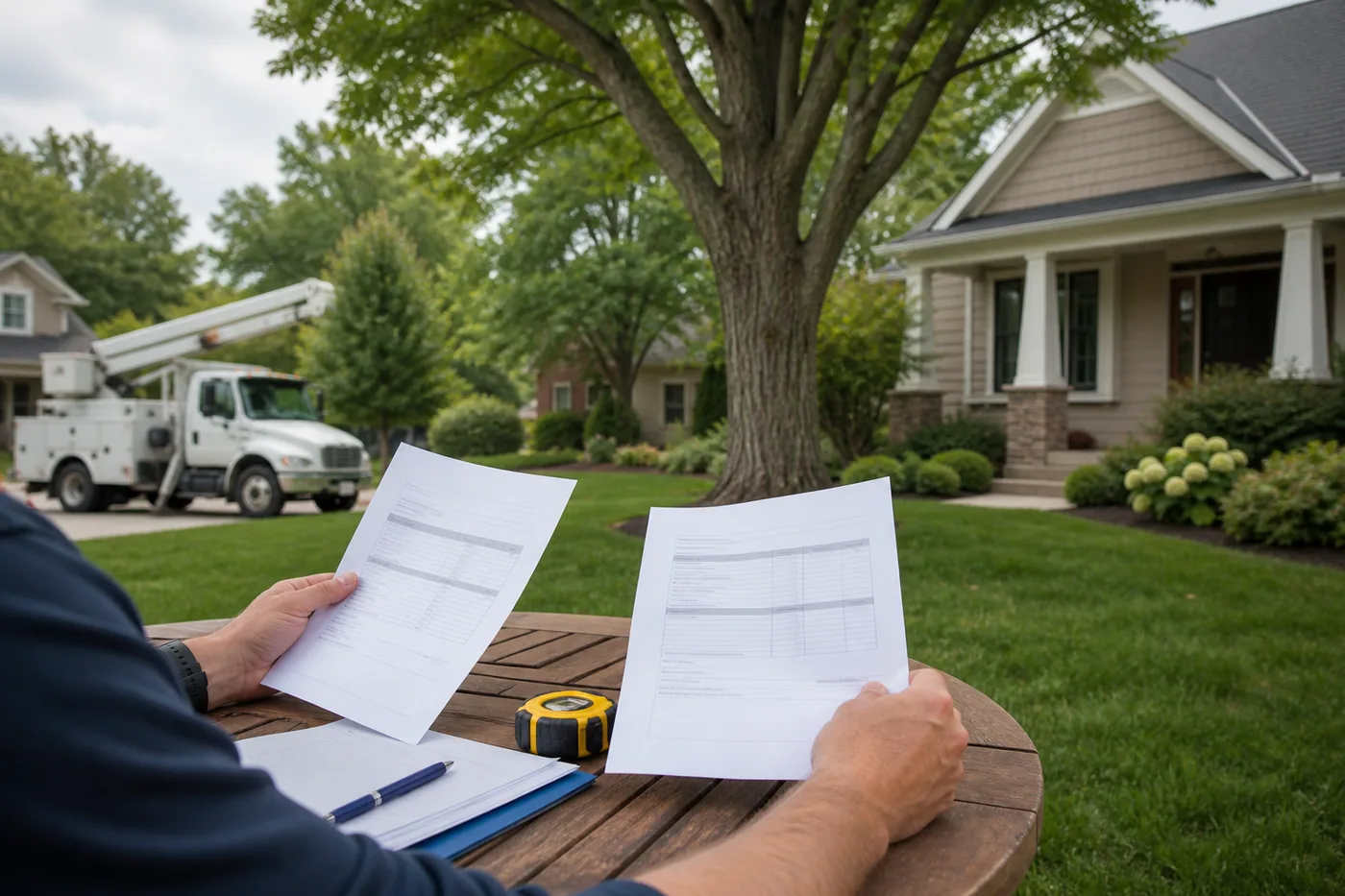
Put the estimates next to each other and create the same categories for each company: inspection, removal, equipment, protection, hauling, stump work, cleanup, permits, taxes, and possible extra charges. Write down what is included, what is excluded, and what questions are still unanswered. This turns a confusing stack of papers into a fair comparison.
For a local example, Anderson Tree Service in Silverdale, Washington is one EasySpruce listing you can review while comparing local options. Confirm that any company serves your address, provides a written scope, carries appropriate insurance, and explains its estimate before you hire it. Tree service businesses can also submit their company for review to help homeowners find local providers.
The Best Estimate Makes The Work Clear
The best tree removal estimate is not always the cheapest one. It is the estimate that identifies the job, explains the method, lists the cleanup, states the payment terms, and gives you a way to approve changes. When two estimates are close in price, the clearer plan can help you choose with more confidence.
Take time to compare the details before signing. If the tree is unsafe or has damaged a structure, keep people away from the area and follow guidance from emergency officials, utilities, your insurer, and a qualified tree professional. Careful comparison helps you protect your property and avoid surprises when the work begins.