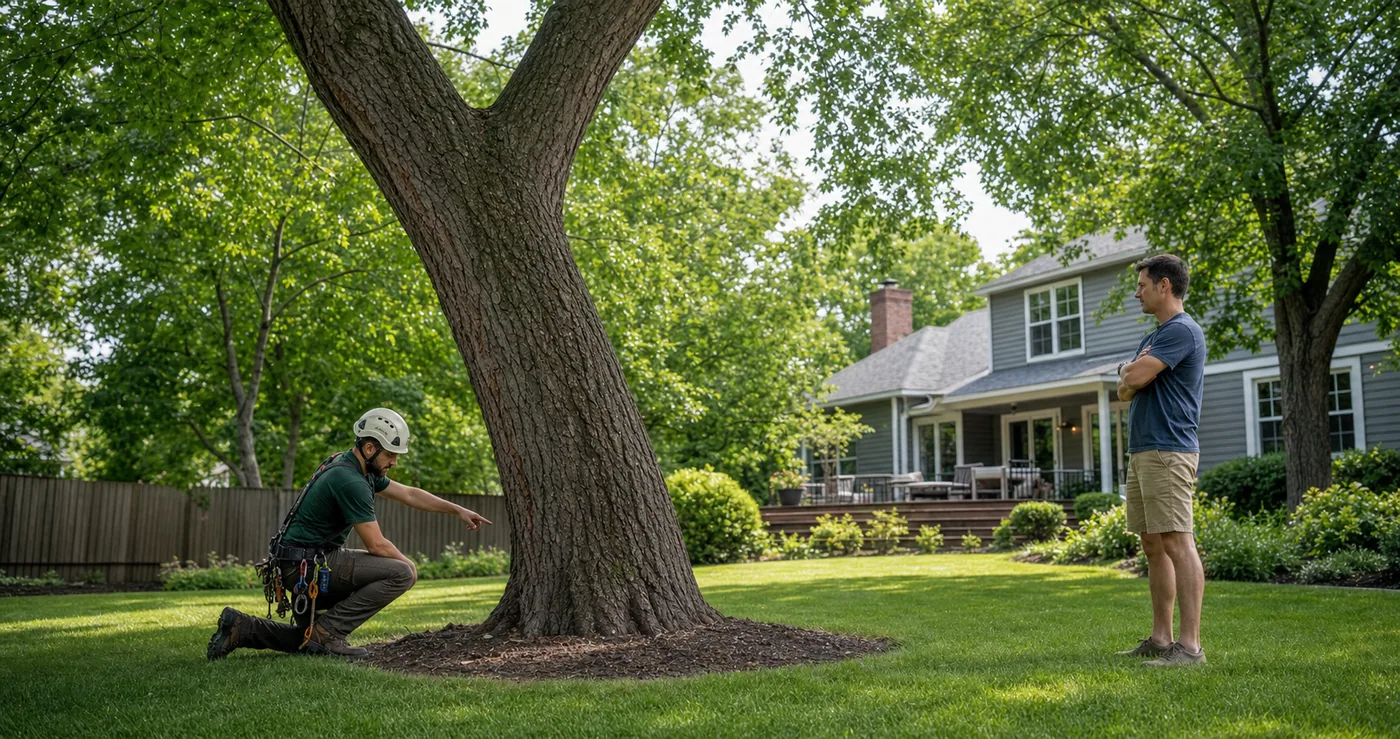
A Leaning Tree Is Not Always An Emergency
A leaning tree can look scary, but a lean by itself does not always mean the tree is about to fall. Some trees grow at an angle for many years. They may lean toward sunlight, away from nearby trees, or because of how the ground shaped their early growth. If the tree has always looked that way and the soil, trunk, and roots look stable, it may simply be part of the tree's normal shape.
The bigger question is whether the lean is new, changing, or tied to damage. A tree that slowly grew with a lean is different from a tree that suddenly tilted after wind, rain, digging, or construction. If you are also seeing cracks, lifted soil, broken roots, or fresh splits in the trunk, the tree needs a closer look. That is when a simple yard concern can become a safety issue.
It also helps to ask what the tree could hit if it fell. A lean over open grass is not the same as a lean over a bedroom, garage, street, fence, or play area. The more important the target, the less room there is to guess. Even a tree that looks calm on a dry day can act differently when the ground is soaked or the wind is strong.
Look For Signs The Lean Is Getting Worse
The most important clue is change. If the tree leaned a little last year but leans more now, pay attention. Take a photo from the same spot every few weeks if you are not sure. You can also look at nearby fences, rooflines, or other trees to see if the angle is shifting. A growing lean may mean the roots are losing their hold or the trunk is no longer strong enough to support the weight.
Check the soil around the base too. Raised soil on one side can mean the root plate is moving. A gap in the ground near the trunk can mean roots are pulling up. Soft, wet, or sunken soil can also be a warning sign, especially after heavy rain. If the tree is leaning toward a house, driveway, sidewalk, play area, or neighbor's yard, do not wait too long to ask for help.
You may also see small signs before a larger problem happens. Fresh cracks in nearby soil, roots that look newly exposed, or a trunk that no longer lines up with old mulch can all matter. If the tree has stakes, cables, or old supports, check whether they are tight, broken, or pulling at strange angles. Those clues can help a tree service understand what changed.
Check The Trunk, Roots, And Canopy
A leaning tree is more concerning when other parts of the tree look weak. Look for cracks in the trunk, deep cavities, peeling bark, fungus near the base, dead limbs, or large branches that have broken off. These signs do not always mean the tree must come down, but they do mean the lean should not be ignored. Our guide on how to know when a tree needs removal explains more warning signs that point to deeper tree problems.
The canopy matters too. If most of the weight is on the leaning side, the tree may have more stress in wind or wet weather. A tree with dead branches on one side and heavy live growth on the other may also be unbalanced. Sometimes trimming can reduce limited weight, but trimming does not fix a weak trunk or failing roots. That is why the whole tree needs to be checked, not just the angle.
Do not poke deep into cavities or pull at roots to test them. That can make damage worse or put you too close to a weak tree. Instead, look from a safe spot and write down what you see. Photos of the trunk, soil, canopy, and nearby targets can help a company give better advice before they visit.
Know When Trimming Is Not Enough
Some leaning trees can stay in place with careful pruning and monitoring. Others are too weak or too risky. If the lean is tied to root movement, trunk splitting, major decay, or storm damage, trimming may only make the tree look cleaner while the real problem remains. The post about when you should remove a tree instead of trimming it can help you think through that choice.
Do not try to fix a dangerous lean by topping the tree or cutting large limbs on your own. Big cuts can make the tree less stable. They can also cause branches to fall in ways that are hard to control. If the tree is close to power lines, leave it alone and call the utility or a trained tree service. If it is already moving, cracking, or leaning on a structure, treat it as urgent.
A good tree service should explain why trimming is enough or why removal may be safer. Ask them what defect they see, what target the tree could hit, and what could happen in the next storm. A clear answer is better than a quick price. It helps you compare estimates and make a choice you can defend later.
Talk To A Tree Service Before The Risk Grows
A tree service can look at the lean, the root zone, the trunk, and the target area around the tree. They can explain whether the tree may be watched, trimmed, braced, or removed. If you are in Florida and want to see an example of a local listing, you can review Harley's Tree Service in Sarasota. You can also compare local companies and ask each one how they judge a leaning tree before they give a price.
If the tree affects a neighbor's yard, talk early and keep the conversation calm. The guide on trimming a neighbor's tree hanging over your property can help you think about property lines and local rules. If you run a tree company and want homeowners to find your business, you can list your tree company on EasySpruce so your service area can be reviewed for the directory.
You do not need to solve every tree problem alone. Your job is to notice the warning signs, stay out of the fall zone, and get a qualified opinion when the lean looks new or risky. A leaning tree may be safe for years, or it may need fast action. The safest next step is to treat change seriously and ask before the problem grows.