Root Damage Is Not Always Easy To See
A tree can look healthy above the ground while its roots are under stress below the soil. Roots hold the tree in place, take in water and nutrients, and help support new growth. When roots are cut, crushed, rotted, or left too dry, the tree may become less stable over time.
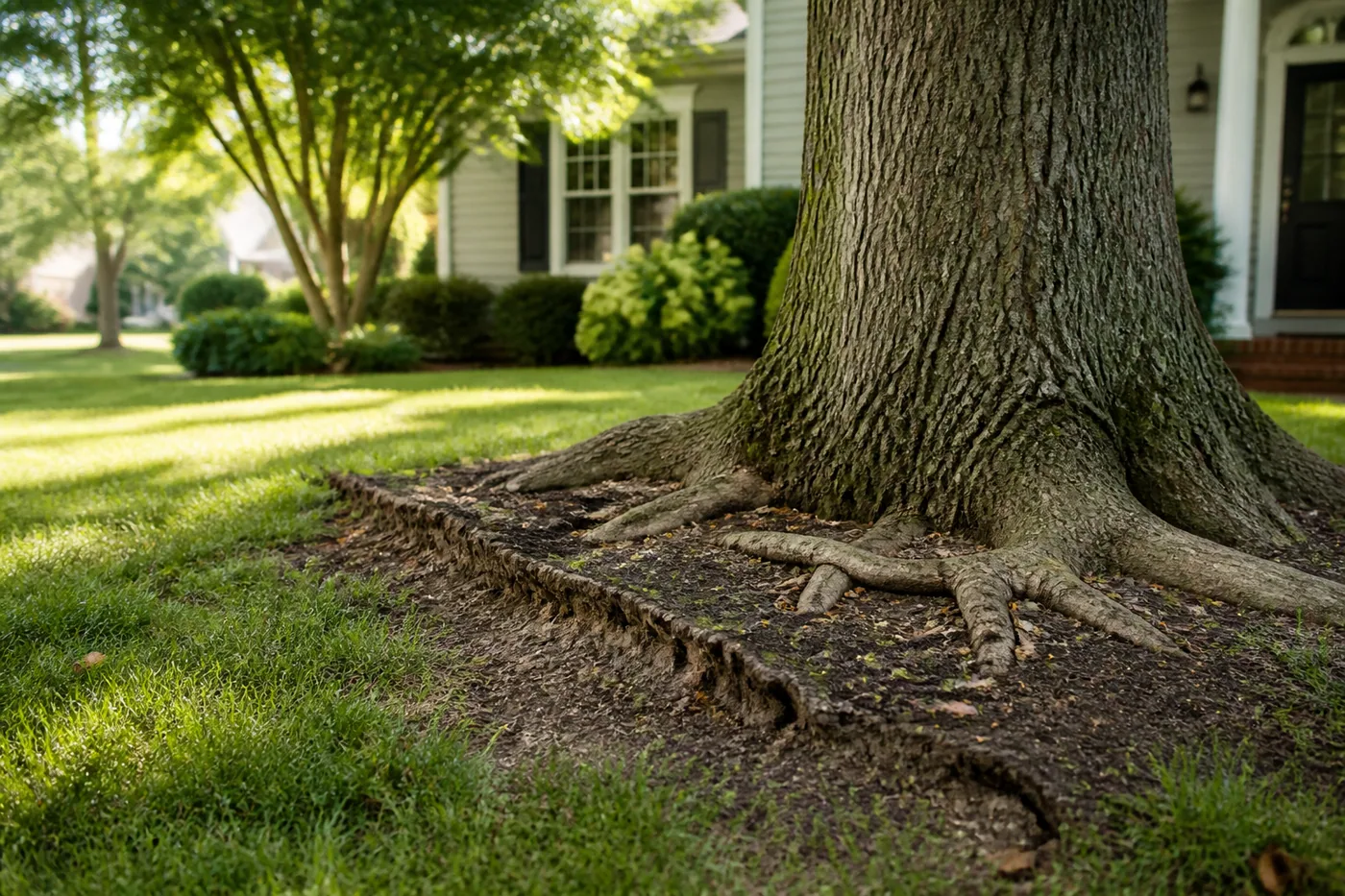
Some root problems are visible. You may see soil pulled away from the trunk, exposed roots, fresh cracks in the ground, or a tree that has started to lean. Other problems show up slowly in the crown, such as thin leaves, dead branches, or growth that is weaker than usual. One sign does not prove that the roots are damaged, but several signs together deserve attention.
Do not dig around the tree to investigate on your own. Digging can cut more roots, and a damaged tree can be less stable than it appears. Start by observing the tree from a safe distance and take photos that show changes over time.
Signs You May Notice Around The Base
Look at the soil and trunk area after heavy rain, construction, severe heat, or a major change in the yard. Exposed roots can appear when soil washes away or when a lawn is graded. A few surface roots can be normal, especially for some tree species, but newly exposed roots, broken roots, or roots with scraped bark can point to a problem.
Cracks or raised sections of soil near the trunk may show that roots or the root plate have shifted. Mushrooms near the base can sometimes be linked with decaying wood, although mushrooms alone do not tell you how serious the problem is. Loose soil, a hollow-sounding trunk base, or a gap where the trunk meets the soil are also reasons to arrange an inspection.
Watch for a new lean or a change in the direction of the lean. A tree that has always grown at a slight angle may be stable, but a recent change after wind or excavation can be more concerning. Our guide to spotting danger in a leaning tree explains why movement and nearby hazards matter.
Changes In The Canopy Can Be A Clue
Root damage can reduce the water and nutrients reaching the leaves. The first clue may be a thinner canopy, smaller leaves, early leaf drop, or branches that die back from the tips. Compare the tree with its normal appearance and with nearby trees of the same type. Weather, insects, disease, and soil problems can cause similar symptoms, so the canopy is a clue rather than a diagnosis.
New shoots growing from the trunk or large branches can also signal stress. A tree may produce extra growth after losing roots, heavy pruning, drought, or other damage. Look for several changes at once, including dead twigs, discolored leaves, loose bark, and slow growth. Record when the changes began and whether they affect one side or the entire tree.
A stressed tree does not automatically need to be removed. A professional may recommend watering changes, mulch adjustments, pruning, soil care, or monitoring. If the main structure is failing or the tree is becoming unsafe, our guide to choosing removal instead of trimming can help explain the difference.
Common Causes Of Root Damage
Construction is one of the most common causes. Digging for a driveway, patio, fence, pool, utility line, or foundation can cut through important roots. Heavy equipment and stored materials can also compact the soil, leaving less air and water available to the roots. Damage may not become obvious until months or years later.
Changes in grade can bury roots too deeply or remove the soil that protects them. A thick layer of fill dirt can limit oxygen near the roots, while erosion can expose and dry them out. Trenching, repeated vehicle traffic, drought, flooding, and poorly placed irrigation can all add stress.
Physical damage is not the only concern. Fungi, insects, disease, and long periods of wet or dry soil can weaken roots. If you recently had yard work done, tell the tree professional what changed and when it happened. That history can help connect the visible symptoms to the possible cause.
What To Do If You Suspect Root Damage
Keep people, pets, and vehicles away if the tree is leaning, the soil is lifting, or large roots are breaking. Do not climb the tree, cut roots, drive equipment over the root area, or try to brace a large tree with homemade supports. If the tree is near a power line, stay clear and contact the utility company when a line may be involved.
Take photos from several safe angles, including the full tree, the trunk base, visible roots, soil cracks, and nearby structures. Write down recent storms, digging, grading, irrigation changes, or landscaping work. Do not cover damaged roots with soil or mulch before an inspection unless a professional tells you how to protect them.
Ask a qualified tree professional to inspect the tree and explain what they see. A useful estimate should separate inspection, pruning, removal, cleanup, and any root or soil work. If the tree is close to a house, read our guide to safe distance between trees and homes while you document the site.
Can A Tree Recover From Root Damage?
Recovery depends on how many roots were damaged, which roots were affected, the tree species, the season, and the tree's health before the problem. Losing a small number of roots may be manageable, while damage close to the trunk or on one side of the root plate can create a greater stability concern. A professional may recommend monitoring instead of immediate removal when the tree is not an urgent hazard.
Good care can reduce additional stress. Follow professional advice about watering, keep heavy traffic away from the root zone, and avoid adding soil or cutting roots without a plan. Mulch can help protect soil moisture, but it should not be piled against the trunk. Pruning should also be limited to the work a qualified professional recommends.
Watch for worsening lean, new cracks, dead branches, changes in soil movement, or rapid canopy decline. These changes should prompt another inspection. A tree that is stable today may become more dangerous after wind, saturated soil, or additional root loss.
Choose The Right Next Step
Root damage can be difficult to diagnose from a photograph or a quick look at the trunk. The safest next step is to describe the visible signs, explain recent yard changes, and ask a tree professional what needs to be inspected. You may need care, monitoring, pruning, or removal, but the right answer depends on the tree and the site.
When comparing estimates, ask what caused the concern, how the tree may respond, and what risks remain after the work. Confirm whether cleanup, stump grinding, and hauling are included. If removal is recommended, our guide to the signs a tree may need removal can help you prepare questions.
EasySpruce helps homeowners find local tree service companies. For example, 3 Brothers Tree Service in Henderson is one approved listing in the directory. Confirm that any company you contact serves your address, carries appropriate insurance, and can explain the plan for your specific tree. Tree service companies can also submit their business for review to join the directory.