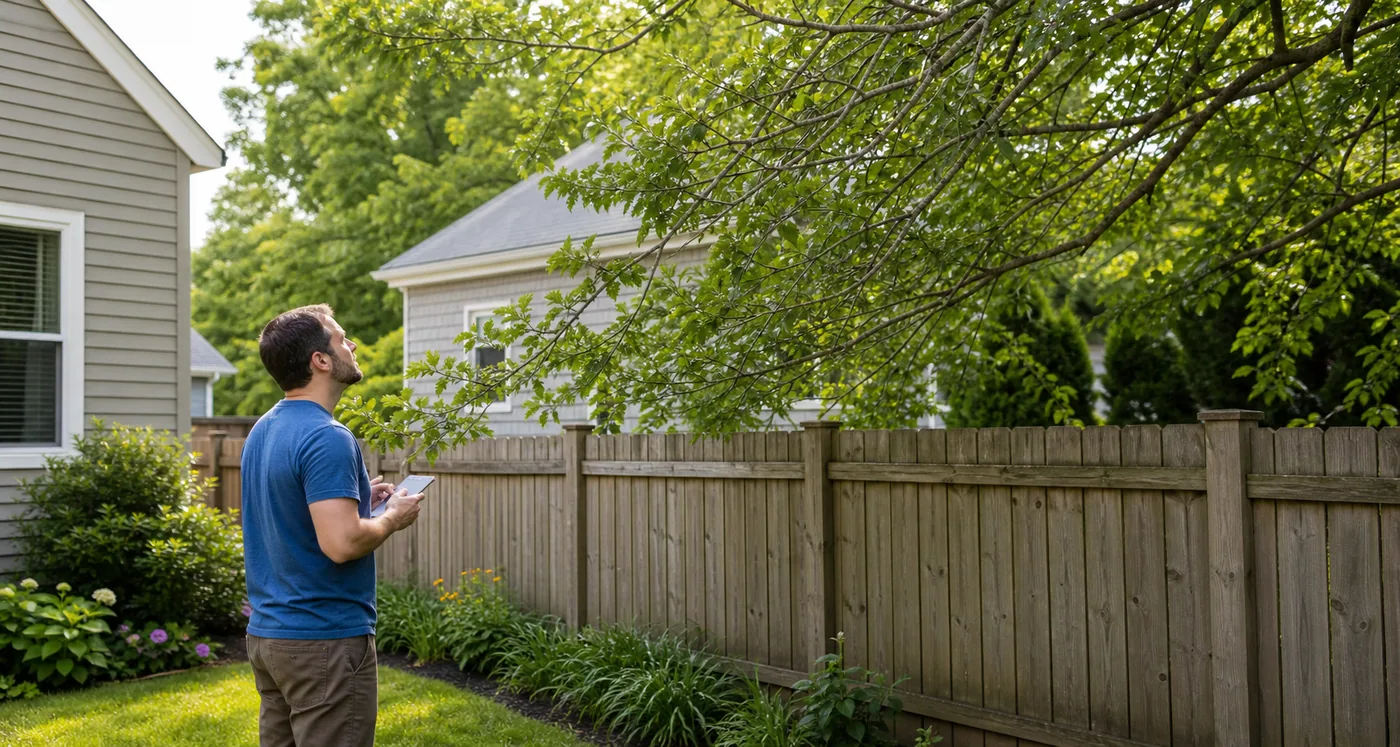
Start With The Property Line
A neighbor's tree can make a simple yard problem feel hard. The trunk may be in their yard, but some branches may hang over your fence, roof, driveway, or garden. In many places, a homeowner may be able to trim branches that cross into their own yard. But that does not mean every cut is allowed or safe. Tree rules can change by city, county, state, and HOA.
Before you cut anything, find the property line as best you can. A fence is not always the exact line. If the tree is close to the line, or if the job could become a fight, it may help to check a survey or call your local office. This article is a general guide, not legal advice. Local rules should always come first.
It also helps to look at the whole tree, not just the branch over your yard. A small branch may be easy to trim. A large limb may be part of the tree's main shape. Cutting too much from one side can make the tree weak or uneven. That is why the property line is only the first question. The health of the tree matters too.
Know What You Should Not Do
The safest rule is simple: do not go onto your neighbor's land without permission. Do not cut the trunk. Do not remove the tree. Do not trim so much that the tree may die or become unsafe. Even if branches hang over your yard, heavy cutting can harm the tree. That can lead to cost, conflict, and safety problems.
It is also smart to avoid cutting large limbs on your own. Big branches can swing, split, or fall in ways that are hard to control. Branches near power lines should be left alone. If the tree has dead limbs, cracks, rot, or a strong lean, the problem may be bigger than normal trimming. Our guide on how to know when a tree needs removal can help you spot warning signs before work begins.
Talk To Your Neighbor First
A short talk can prevent a long problem. Tell your neighbor what you see and why it matters. Maybe branches scrape your roof. Maybe leaves clog your gutters. Maybe a limb hangs over a play area. Use calm words and share the real concern. Many people are more willing to help when they know the issue is safety or yard care, not blame.
If the tree looks unsafe, take clear photos from your side of the property. Write down the date you noticed the problem. If you send a message, keep it polite and simple. Ask if they are open to trimming or having a tree service look at it. A written note can be useful if the issue gets worse later.
Check Local Rules Before You Trim
Tree laws are local. Some cities protect certain trees. Some areas require permits for large cuts. Some HOAs have their own rules about trees, fences, and shared landscaping. Your town may also have rules about trees near sidewalks, streets, drainage areas, or protected land. That is why a quick call or website check can save trouble.
You should also ask who pays for the work. In some cases, the person who wants branches trimmed pays for the trimming on their side. In other cases, neighbors agree to share the cost. If the tree is clearly dangerous, the answer may be different. Since rules are not the same everywhere, it is better to ask before you schedule a crew.
If the tree is in a protected area, the rules may be stricter. This can include street trees, trees in wetlands, trees near public paths, or trees that are part of a new home plan. Some cities also have rules for old or large trees. If you are unsure, call the city, county, or HOA before work starts. A few minutes of checking can prevent a fine or a neighbor dispute.
When To Call A Tree Service
Call a tree service when the branches are large, high, near a roof, near wires, or hard to reach. A good crew can explain what can be trimmed without hurting the tree. They can also tell you if the tree has signs of decay, weak branch joints, or storm damage. That kind of check matters because the wrong cut can make the tree less safe.
A tree service can also help you plan a neighbor-friendly job. They may suggest a light trim instead of a hard cut. They may ask for written permission if they need to enter the other yard. They may also help you decide if the work should be done now or after a season of growth. Good timing can help the tree recover better.
If you are not sure what to do next, contact EasySpruce and we can help you think through the next step. The goal is not to win a fight with a neighbor. The goal is to keep your yard safe, protect the tree when possible, and avoid a bigger problem later.