The Short Answer
Usually, roots do not keep spreading through the yard after a tree is cut down. A root system needs energy from leaves to stay active. When the trunk and canopy are gone, the roots lose their food source. Over time, they use their stored energy, die back, and slowly break down in the soil.
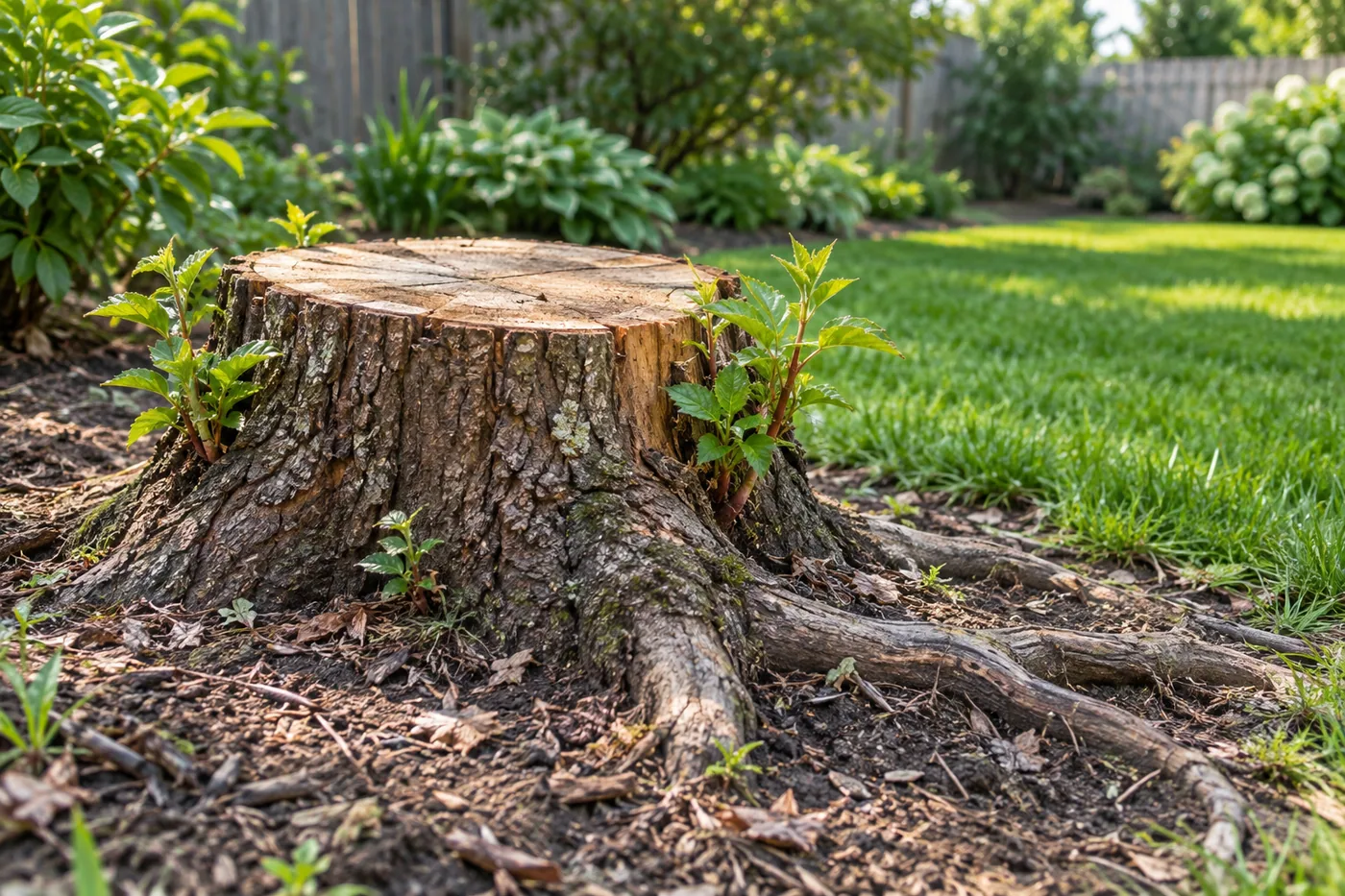
There is one important exception. Some trees can send up new shoots from the stump, root crown, or nearby roots. Those shoots can make it look like the roots are still growing. If the shoots become leafy and healthy, they can feed part of the old root system and sometimes grow into a new small tree.
That is why a cut tree can leave more questions than expected. You may see sprouts around the stump, find roots near a walkway, or wonder whether the old roots are still affecting a pipe. The answer depends on whether the stump is alive, the kind of tree, and what you want to do with the space next.
What Happens To Roots After Tree Removal
After a tree is removed, the roots already in the ground stay where they are. They do not disappear right away, and a mature root can take years to decay. As the wood breaks down, the soil around it may settle a little. You may notice this most in a lawn, mulch bed, or area where a large root was close to the surface.
Dead roots are different from growing roots. A dead root is no longer pushing farther into the yard or searching for water. It is simply decaying below the ground. That matters when you are planning a garden, fence, patio, or new grass. The roots may still be in the way physically, but they are not usually expanding after the tree is gone.
If you are worried about a root near concrete, a pipe, or a home, start with the actual problem instead of assuming the old tree is still causing it. Our guide to how roots can affect a driveway, pipe, or foundation explains why old damage, drainage, and the condition of the structure can matter too.
Why A Stump Can Grow New Shoots
Many trees are unable to grow back after being cut down. Others are built to respond to a cut with new growth. The stump may send up small shoots along its edge, or new shoots may appear a short distance away from roots close to the surface. This is often called sprouting or suckering.
A few new shoots do not always mean the whole tree will return. Some use up the energy left in the roots and then fail. But if shoots keep coming back after you cut them, the stump may still be alive. They can become a repeated yard chore, especially if you want a clean lawn or plan to use the area for something else.
Do not use a chemical product without checking the label, local rules, and the risks to nearby plants. A stump close to a garden, well, drain, or shared property line needs extra care. When regrowth is persistent or the work is near utilities, a qualified tree professional can help you decide on the safest approach.
Does Stump Grinding Stop Root Growth?
Stump grinding removes the visible stump and the root crown below it. That usually stops the stump from sending up new shoots because the main source of stored energy and buds is removed. The larger roots farther from the stump are normally left in place to decay underground. They are not pulled out across the whole yard.
Grinding is not the same as digging out every root. Full removal can mean major digging and can disturb soil, irrigation, hardscape, or nearby plants. For many homeowners, grinding is the practical choice when the stump is in the way, keeps sprouting, or makes mowing and landscaping harder. Our guide to what to expect from stump grinding explains the process in simple terms.
Ask a company how deep it plans to grind, what cleanup is included, and whether it expects roots to affect the next project. If you want to plant a new tree in the same spot, build a fence, or pour a small slab, say so before the work begins. The best depth and preparation can depend on what you want to do afterward.
When Old Roots Still Need Attention
Most old roots can be left alone. They break down naturally, and digging them out is often more trouble than it is worth. But you may need a plan when roots are lifting a small surface, blocking a new post hole, leaving a low spot as they decay, or sitting where you want new landscaping.
Do not cut or pull roots near a tree that is still standing. Even roots from the removed tree can be mixed with roots from a nearby healthy tree. Cutting the wrong root can hurt that tree or make it less stable. If roots are close to utility lines, call 811 in the United States before any digging project and wait for the lines to be marked.
You should also get the right trade involved for the problem. A recurring drain backup may need a plumber and camera inspection. A cracked slab may need a concrete or foundation professional. A tree service can help with the stump, regrowth, and safe tree work, but removal alone does not repair every problem below or beside the ground.
Plan The Next Step Before You Remove The Stump
Think about the finished yard before you choose a service. If you only want to mow over the spot, a standard stump grind may be enough. If you want to plant grass, add a bed, install a fence, or put in a patio, tell the company. You may need wood chips removed, new soil added, or a different plan for the old root area.
A written estimate should make the scope clear. Ask whether it includes stump grinding, hauling chips, filling the hole, surface-root work, and cleanup. Our article on comparing tree-service estimates can help you look beyond the total price and see what each company is actually offering.
EasySpruce lists approved tree service businesses by location. For example, Pocatello Trees in Pocatello, Idaho lists tree removal, tree trimming, stump grinding, emergency tree service, and storm cleanup. Confirm that any company serves your address, carries appropriate insurance, and can explain the plan for your particular stump and yard. If you run a tree service, you can also submit your company for review.