Tree Roots Can Affect Property, But The Details Matter
Tree roots can damage some parts of a property, especially thin concrete, old pipes, cracked pavement, and soil that moves easily. Roots are not usually strong enough to push through a sound foundation wall. They can, however, grow into small cracks, follow leaks, lift slabs, or change the moisture around a structure.
The tree is not always the only cause of a problem. Drainage, soil type, age, construction, and poor installation can all play a part. Before cutting roots or removing a tree, document what you see and ask the right professional to help identify the cause.
Can Roots Damage A Foundation?
Roots usually do not break through an intact concrete foundation simply by pushing against it. They may grow beside a foundation because the soil there has air, water, or open space. If the wall already has a crack, roots can sometimes enter the opening as it gets larger. Roots can also contribute to soil movement by taking up water, especially during long dry periods.
Look for foundation cracks that are new, growing, or wider at one end. Doors and windows that suddenly stick, sloping floors, or water entering a basement or crawl space also deserve attention. These signs do not prove that a tree caused the issue. A foundation contractor or structural professional may need to inspect the building, while a tree professional can assess the roots and tree condition.
A tree that is close to a home is not automatically unsafe. Mature size, species, soil, drainage, and the condition of the structure all matter. Our guide to how close trees can grow to a house explains why trunk distance alone does not answer every question.
Can Roots Get Into Water Or Sewer Pipes?
Roots can enter older or damaged water and sewer lines through loose joints, cracks, or separated connections. A small opening can let fine roots grow toward moisture. Once inside, the roots may catch paper and other material, narrow the pipe, and contribute to repeated blockages. This is more likely with older lines or pipes that were not sealed well.
Common warning signs include slow drains, repeated backups, gurgling toilets, sewage odors, wet spots in the yard, or a strip of unusually green grass near a buried line. A plumber can use a camera to inspect the inside of the pipe and identify the location of a break or root intrusion. Avoid assuming that cutting down the nearest tree will repair the line. The pipe itself may still need repair or replacement.
If a tree must be removed because its roots are affecting a line, ask how the crew will protect nearby utilities and how the stump and remaining roots will be handled. Keep utility locating and plumbing work with the appropriate professionals. Tree roots and underground lines can be difficult to judge from the surface.
Why Do Roots Lift A Driveway Or Walkway?
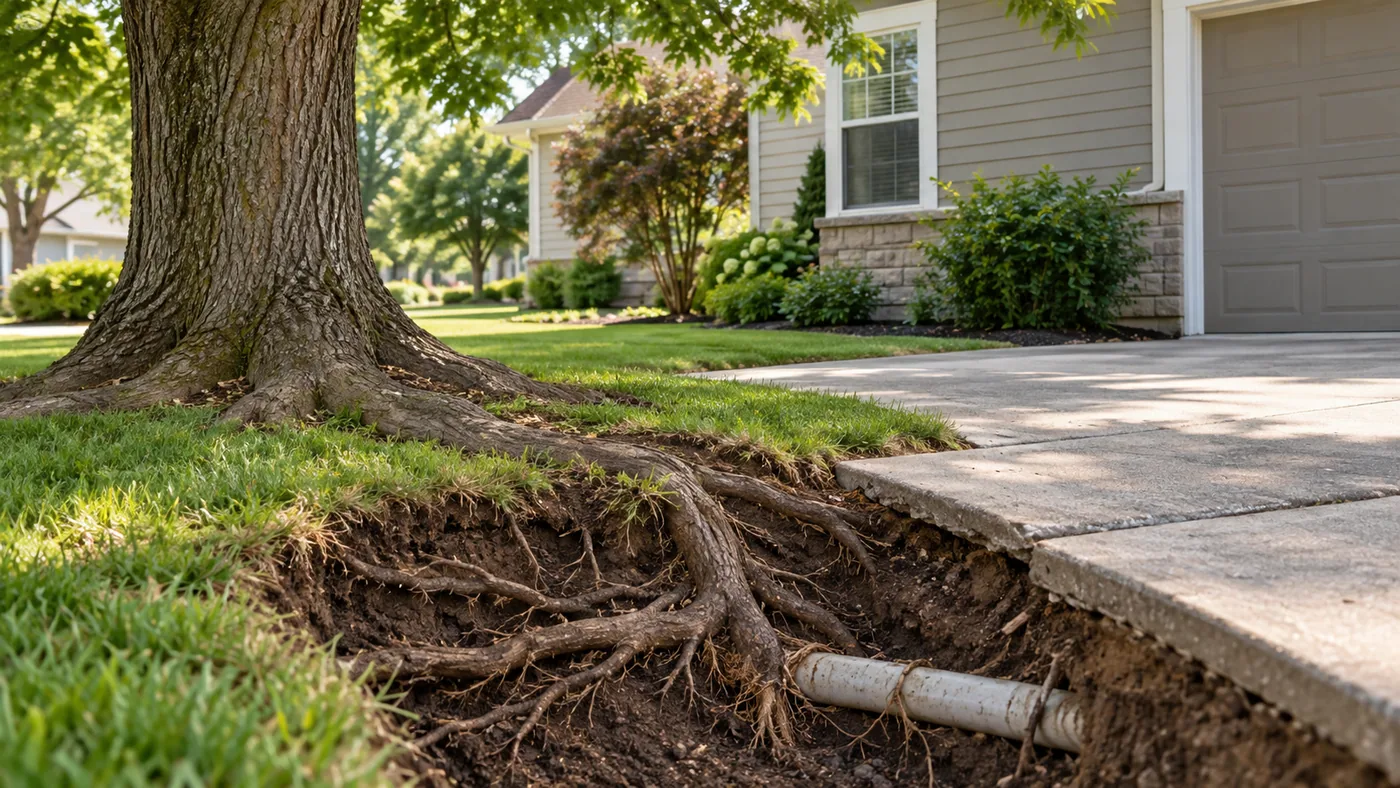
Driveways, sidewalks, patios, and other thin slabs can be lifted when a large root grows underneath them. Roots do not need to break the concrete to create a trip edge. Small changes in soil moisture, frost, erosion, and poor base preparation can make the movement worse. A lifted slab may have more than one cause.
Take photos that show the full slab, the raised edge, nearby roots, drainage, and the tree. Measure the height of the lift if it is safe to do so. Do not cut a large root just to make a walkway level. Roots that help hold the tree upright may be close to the surface, and cutting them can create decay or stability problems.
Possible solutions include repairing or replacing a section of pavement, changing the path, pruning a small root under professional guidance, or managing the tree and site together. The best option depends on the size and location of the root, the tree's condition, and how much the surface has moved.
- A raised or uneven section of concrete.
- Cracks that follow a root or appear near the trunk.
- A new trip edge along a walkway.
- Standing water caused by a changed slope.
- Roots visible after erosion or soil washing away.
How To Tell If The Tree Is Part Of The Problem
Start with the timing. Did the crack, backup, or raised slab appear after construction, a drought, flooding, or a major storm? Look at the tree too. Exposed roots, a new lean, dead branches, mushrooms near the base, or soil lifting around the root plate can point to a tree health or stability concern. Our article on signs of tree root damage can help you organize what you notice.
Next, consider the location of the damage. A pipe running near a mature tree is worth a camera inspection, but the tree may not be the cause. A driveway lifted by one large root may have a clearer connection. A foundation crack may need a building specialist before anyone recommends root cutting or tree removal.
Get the observations in writing when possible. Ask each professional what evidence supports the recommendation, what alternatives exist, and what risk remains after the work. This helps you avoid paying for tree removal when a plumbing or drainage repair is the real solution.
Should You Cut The Roots Or Remove The Tree?
Do not cut major roots on your own. Roots close to the trunk or on one side of the tree may help support it. Removing them can weaken the tree, invite decay, and increase the chance of failure during wind. Even smaller roots may be connected to a larger root system that is not visible from the surface.
A qualified tree professional can assess the species, trunk size, canopy, root location, soil, and nearby targets. They may recommend monitoring, careful pruning, a change to the hardscape, root-zone protection, or removal. If removal is suggested, ask what problem it solves and whether the pipe, foundation, or pavement will still need separate repairs.
Our guide to knowing when a tree needs removal covers broader warning signs. Removal can be reasonable when a tree is unstable, severely damaged, or creating an ongoing risk that cannot be managed safely. It should be based on the whole site, not just on the fact that roots are nearby.
What To Do Next
Keep people and vehicles away from a tree that is leaning, has lifted soil, or has large broken roots. Do not dig around the trunk, cover exposed roots with a deep pile of soil, or use homemade braces. If a power line is involved, stay clear and contact the utility company. For sewage, water, or foundation concerns, contact the appropriate building or plumbing professional as well as a tree professional when needed.
Collect photos, note recent weather and construction, and ask for a site-specific opinion. A good estimate should explain whether it includes inspection, pruning, removal, stump grinding, cleanup, hauling, or protection for nearby surfaces. EasySpruce can help you compare local options. For example, Bremerton Tree Care in Bremerton is one approved directory listing to review while you compare companies. Confirm current service area, insurance, credentials, and experience before hiring.
If you own a tree care business, you can submit your company for review on EasySpruce. A complete listing can help homeowners find local help when roots, driveways, pipes, or trees raise difficult property questions.