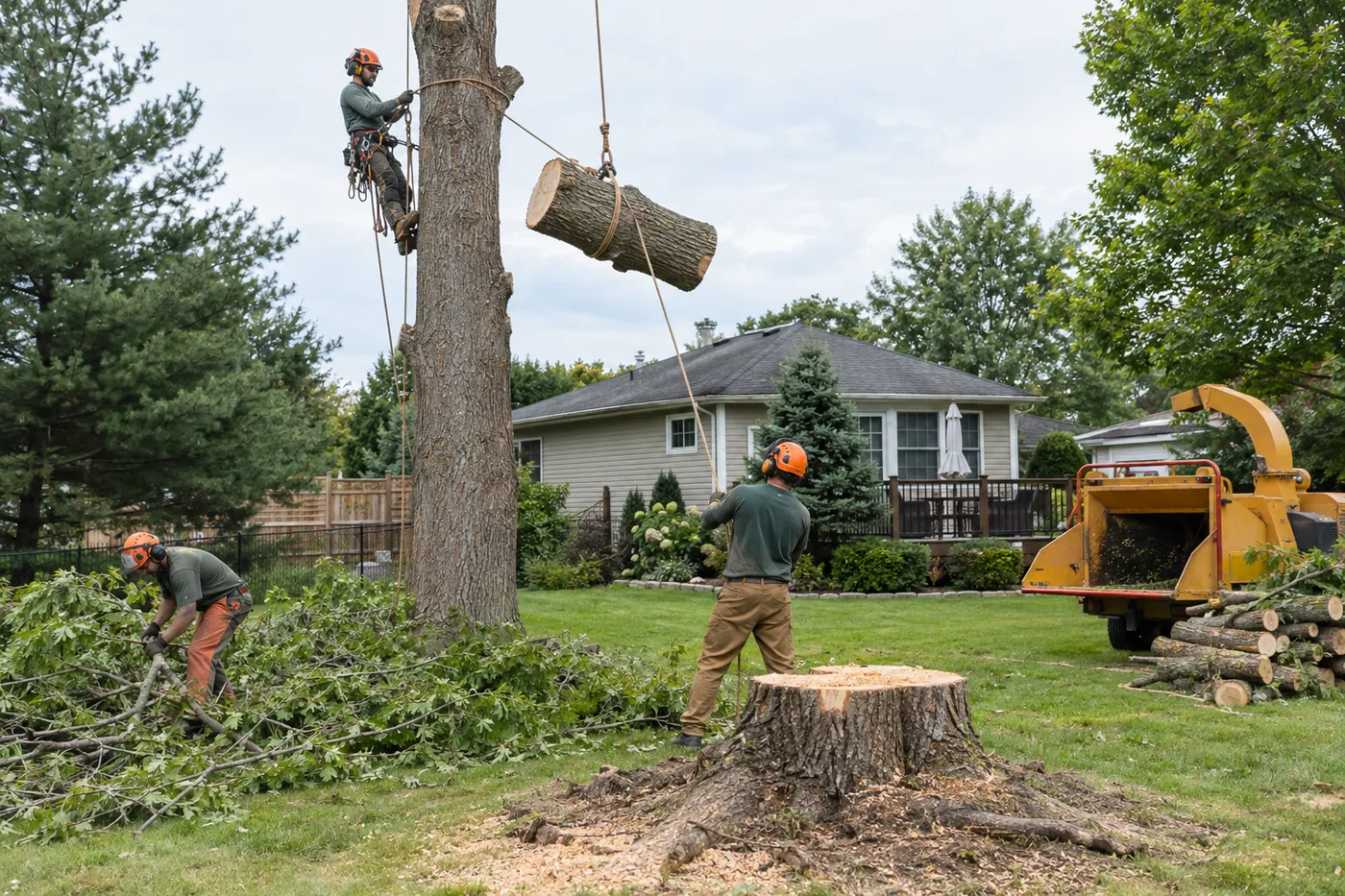
Tree Removal Is More Than Cutting Down A Tree
When you ask for tree removal, the work can include much more than making the tree fall. A complete job may include planning the cuts, protecting nearby property, taking down the tree in pieces, moving the wood, chipping brush, hauling debris, and cleaning the work area. The exact scope depends on the tree, the yard, and what you want left behind when the crew is done.
That is why a written estimate matters. One company may quote only the cutting work, while another may include haul-away and cleanup in the same price. Before you compare totals, ask each company to explain the full plan. Our guide on comparing tree removal estimates can help you put the same questions in front of every company.
Cutting, Lowering, And Removing The Tree
The first part of the job is getting the tree down safely. In an open yard, a crew may be able to fell the tree in one planned direction. Near a home, fence, driveway, garden, or utility line, the crew may climb the tree or use a bucket truck, then cut it into smaller sections. Ropes and rigging can help lower heavy limbs and trunk pieces with more control.
Your estimate should say which tree will be removed and how the crew expects to handle it. It does not need to list every single cut, but it should make the method clear enough for you to understand the work. A difficult location, limited access, dead wood, or a large trunk can require more time, people, and equipment. Those details are a normal reason for one removal quote to cost more than another.
- Identifying the tree or trees included in the job.
- Safe cutting, climbing, rigging, or bucket-truck work as needed.
- Protection for nearby structures, lawns, and hard surfaces.
- Moving cut wood and branches to the chipper, truck, or a staging area.
Brush Chipping, Log Hauling, And Cleanup
After the tree is down, crews still need to deal with the branches, logs, and sawdust. Small branches are often chipped on site. Larger trunk sections may be cut into shorter pieces for hauling, firewood, or another plan you agree on before the work starts. Some homeowners want to keep usable firewood or wood chips. Others want the crew to remove everything.
Ask what “cleanup” means in the estimate. It may include raking the main work area and blowing sawdust from the driveway, but it may not include restoring every mark in a lawn after heavy equipment has crossed it. Ask whether haul-away is included, whether chips or logs will stay, and whether there is a fee for extra debris. Clear answers prevent a pile of wood from becoming an unexpected part of the project.
Stump Grinding Is Usually A Separate Choice
Tree removal usually leaves the stump in place. Stump grinding can be added to remove the visible stump below ground level, but it is often priced separately. The machine turns the stump into wood chips and leaves the larger roots in the ground. That can make the area easier to mow, cover with soil, or use for a new planting.
If you want stump work, ask how deep the crew will grind, whether the chips will be hauled away, and whether soil and leveling are included. Those details change the final result. Our guide on how stump grinding works explains what the service does and why it is not the same as removing every root.
Permits And Extra Costs To Ask About
A tree service may help with permit paperwork, but that does not mean permits are automatically included. Rules vary by city, county, HOA, tree species, and location on the property. Ask who will check the rules, who applies, and whether permit fees, arborist reports, or inspections are part of the price. Read our guide to tree removal permit questions before scheduling the job.
Other possible add-ons include emergency service, crane work, difficult access, traffic control, utility coordination, travel, and repair of a damaged lawn or fence. A company should explain any condition that could change the price before starting extra work. Ask how it will contact you for approval if the job reveals a problem that was not visible during the estimate.
Use The Estimate To Set Clear Expectations
The best estimate tells you what the crew will cut, where the material will go, what cleanup is included, and which services cost extra. You should also ask for current insurance information, expected timing, payment terms, and a clear plan for weather delays. Do not assume a low price covers every part of the job. A complete scope is often more useful than a short quote with no details.
Before work starts, walk through the estimate with the crew lead. Point out gates, irrigation heads, garden beds, vehicles, and anything else that needs protection. Confirm where trucks and equipment can park, whether the crew needs access to a gate, and where you want logs or chips placed if they are staying. Keep children, pets, and visitors out of the work area until the crew says it is safe again.
When the job is finished, take a few minutes to look at the site before making the final payment. Check that the listed tree is gone, the agreed material has been removed or left where requested, and the cleanup matches the written scope. For one directory example, Fournier's Tree Service, LLC serves central, midcoast, and southern Maine and lists tree removal, stump grinding, emergency tree service, storm cleanup, and land clearing. Confirm that any company serves your address and can provide the exact scope you need. If you operate a tree service company, you can also submit your company for review so homeowners can find your services.