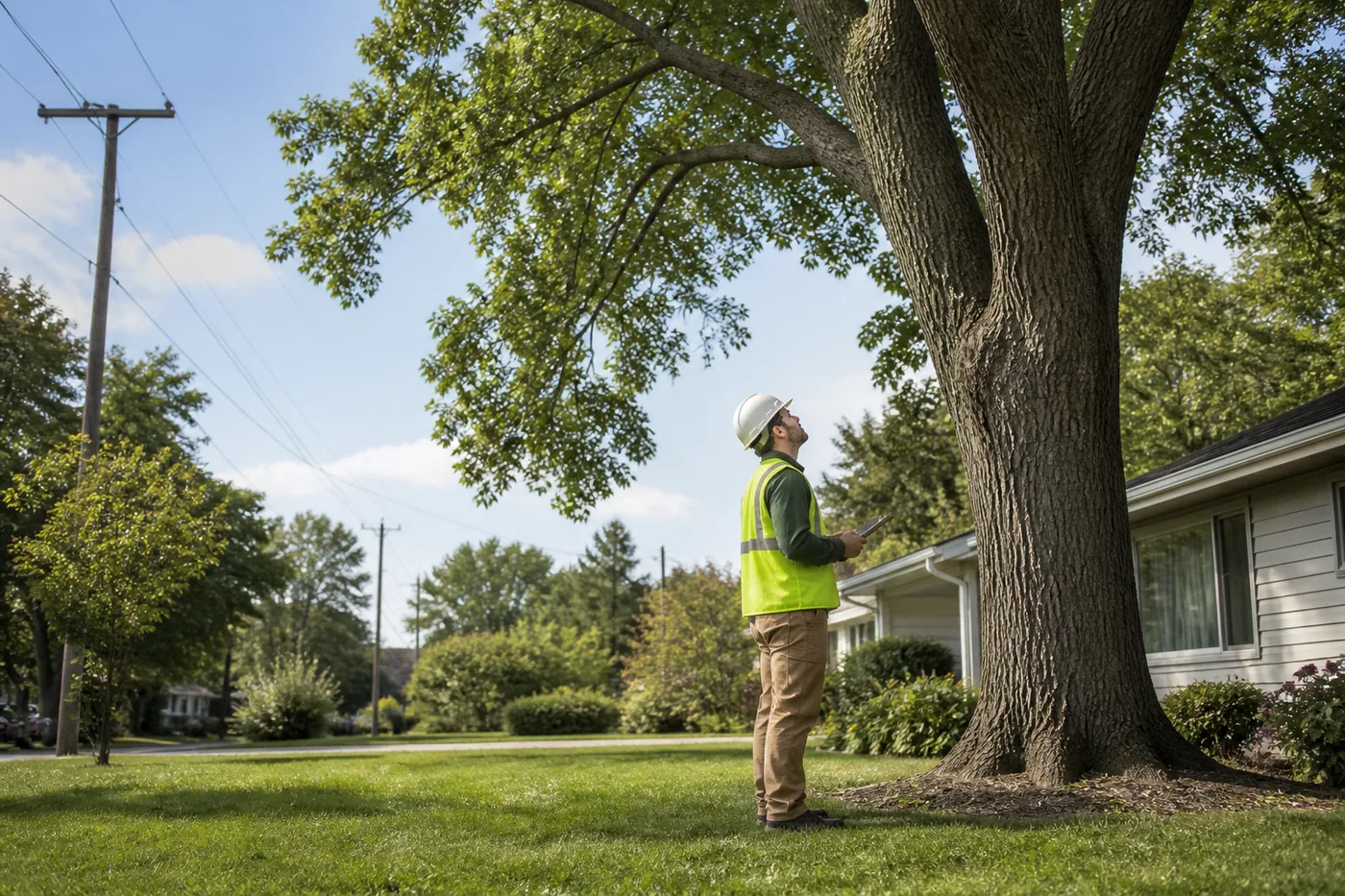
Work Near Power Lines Needs A Careful Plan
Tree work near power lines is not a good project for a homeowner with a ladder, pole saw, or chainsaw. A branch can move when it is cut, a tree can fall in an unexpected direction, and equipment can get too close to a line even when the work looks simple from the ground. Treat every nearby line as a serious hazard until the utility company and a qualified tree professional explain the plan.
The safest company will want to see the tree and the lines before giving a final price. It should ask what kind of work you need, what is below the tree, and whether the tree is leaning or damaged. A careful inspection is especially important after a storm. Our guide to spotting warning signs in a leaning tree can help you describe what you see without trying to diagnose the tree yourself.
Call The Utility Company When A Line May Be Involved
If a tree or branch is touching a power line, keep people and pets away from the area. Do not touch the tree, fence, vehicle, puddle, or anything else that may be carrying electricity. Do not try to move a branch with a tool. Call the utility company or emergency services for immediate danger, such as a downed line, sparks, smoke, or a blocked road, and follow their instructions.
Even when the tree is only close to a line, ask the tree company how utility coordination will work. The company may need the utility to inspect, de-energize, move, or otherwise manage the line before tree work starts. Do not assume that a company can make a nearby line safe on its own. The exact process depends on the utility, the line, the location, and the work planned.
Ask About Experience, Insurance, And The Crew
Ask how the company handles trees near power lines and who will perform the work. You can ask whether the crew has experience with rigging, controlled branch removal, bucket trucks, and coordination with utilities. A company should answer clearly without promising that a risky job will be quick or easy. If the work requires a credential, permit, or utility approval in your area, ask who will handle that step.
Request current proof of insurance and ask what the policy covers. Insurance does not make unsafe work safe, but it is an important part of screening a company. Also ask whether subcontractors will be used and whether the same safety plan applies to everyone on the job. Our tree company hiring checklist covers other details to review before accepting an estimate.
A Safe Estimate Should Explain The Work
A useful estimate should identify the tree, describe the recommended work, and explain how the crew expects to control branches and logs. It should mention nearby lines, the house, roof, driveway, fences, and other targets. Ask whether the price includes equipment, traffic or access control, hauling, chipping, stump grinding, and final cleanup. If utility work is needed first, ask whether that cost is included or handled separately.
Ask what could change the price and how the company will get your approval before doing added work. Weather, blocked access, hidden decay, and changes required by the utility may affect the schedule or scope. You can use the EasySpruce tree service cost estimator for a rough planning range, but a calculator cannot inspect the line, tree, property, or crew access.
Watch For Red Flags
Be cautious if someone says the job is safe without inspecting it, tells you to hold or move a line, or asks you to arrange unsafe work yourself. A company that ignores the utility, refuses to explain the equipment plan, or says the crew can work around an energized line without a clear process deserves extra scrutiny. Do not let a low price or same-day promise pressure you into starting before safety questions are answered.
Other warning signs include no written estimate, unclear insurance answers, a demand for full payment before work begins, or a request to remove branches from a neighbor's property without permission. The absence of one detail does not prove a company is dishonest, but several vague answers should make you pause. If the tree is also showing decay, root movement, or storm damage, review these root damage warning signs and keep your distance.
Ask These Questions Before You Hire
Use the same questions with every company so you can compare plans instead of comparing only prices. Ask: Have you inspected the tree in person? What utility coordination is needed? Who will contact the utility? What equipment will be used? How will the crew protect the property? Who controls added work if the tree is different from expected? What will be hauled away, and what will remain after cleanup?
Also ask when the work can begin, what weather could delay it, and what you should do before the crew arrives. Take photos from a safe distance and show the company the line, tree, structures, and access points. Clear information helps the company plan, and it gives you a written record if the estimate or safety plan changes.
Choose The Clearest Safe Plan
The best company for work near power lines is not necessarily the cheapest or the fastest. Look for a company that inspects the site, respects the utility's role, explains its equipment and protection plan, provides appropriate documentation, and gives you a written scope. If a company cannot explain how it will keep people, property, and lines safe, keep looking.
EasySpruce lists approved tree service businesses by location. For example, Anderson Tree Service in Silverdale is one local listing that includes tree removal, tree trimming, stump grinding, storm cleanup, and land clearing. Confirm the service area, insurance, utility plan, and exact estimate before hiring any company. Tree service companies can also submit their business for review to help homeowners find local options.