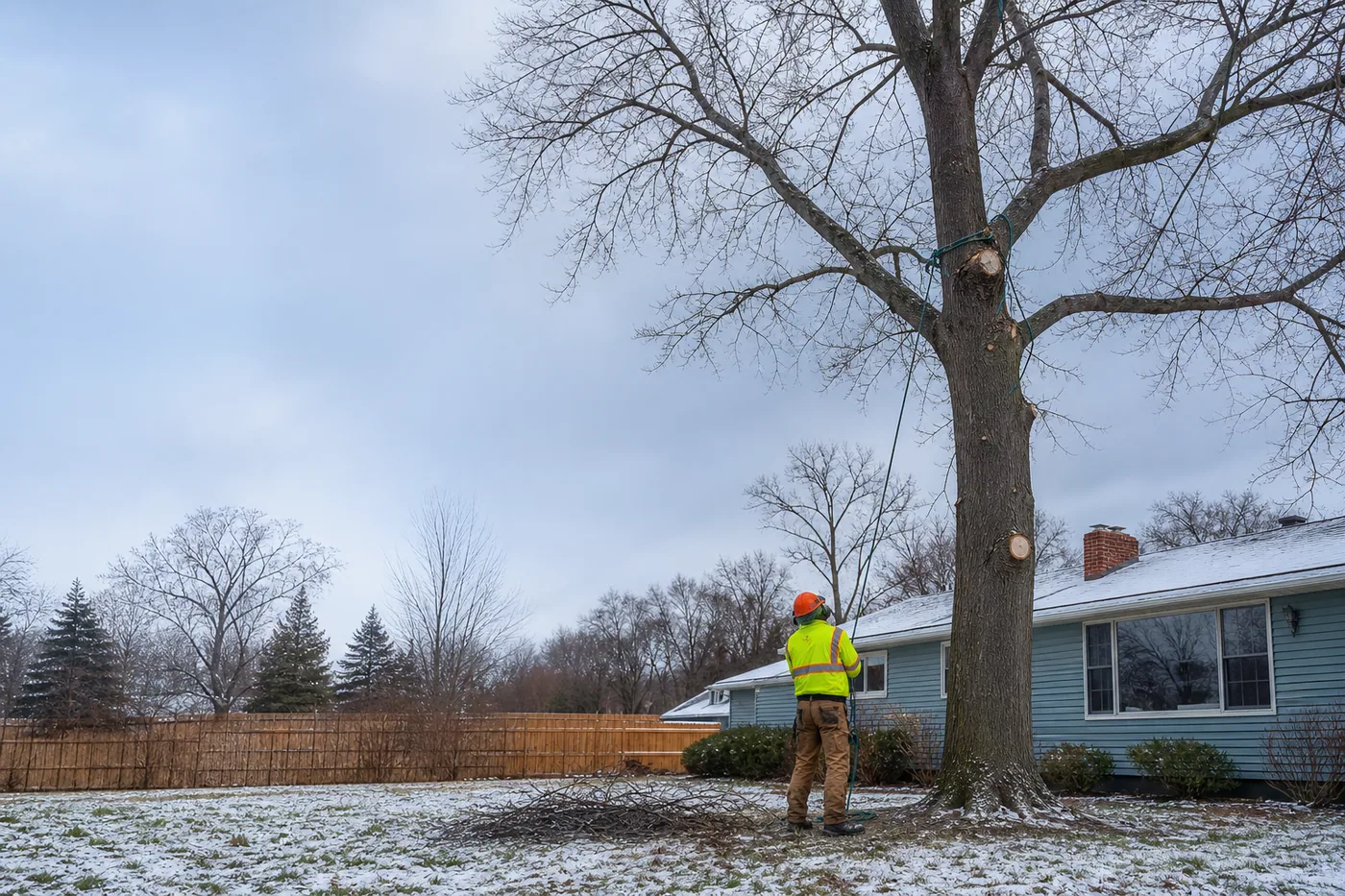
Winter Tree Removal Is Often Possible
Yes, a tree can often be removed in winter. Tree service companies work in cold weather when the site is safe, the ground is stable enough for equipment, and the weather allows the crew to do the job carefully. In many places, winter can be a practical time for removal because deciduous trees have fewer leaves and the yard may have less active landscaping around it.
The season does not make every removal easy. Frozen ground, ice, deep snow, strong wind, and short daylight can change the plan. A professional tree service should inspect the tree and the property before promising a date. The right question is not only whether removal is possible, but whether the crew can complete it safely without damaging the home, yard, equipment, or nearby property.
Why Some Homeowners Choose Winter
A leafless tree can be easier to inspect. Without a full canopy, a professional may have a clearer view of dead branches, weak unions, cracks, and the tree's shape. The crew can also see nearby roofs, fences, driveways, and utility lines more clearly when leaves are not blocking the view. This does not replace a complete inspection, but it can help with planning.
Winter removal may also cause less disruption to an active garden or lawn. Many plants are dormant, and there may be fewer outdoor activities happening around the work area. In some regions, tree companies have more scheduling space during the colder months. If the tree is already dead, badly damaged, or threatening a structure, waiting for spring may add risk without providing a real benefit.
When Winter Conditions Can Make Removal Harder
Frozen or wet ground can create problems for trucks, lifts, chippers, and cranes. Heavy equipment may leave ruts or become stuck, especially near a slope or a soft area of the yard. Ice can also make it harder for workers to walk, set ladders, handle ropes, or move cut sections. A careful company may delay the job until the site is firm and the forecast is suitable.
Snow can hide roots, rocks, edging, irrigation heads, outdoor furniture, and other obstacles. It can also cover damage near the base of the tree. Before work begins, tell the crew about buried lines, septic areas, sprinklers, and any property features that are not easy to see. If the tree is leaning or has root movement, read our guide to recognizing warning signs in a leaning tree and keep people away from the area until it is inspected.
Winter Can Be A Good Time For Planning
Winter is not only useful for urgent removals. It can also be a good time to arrange planned work before spring growth begins. If a tree is crowded against a house, blocking a planned project, or showing signs of decline, schedule an inspection early. That gives you time to compare written estimates, check local rules, and decide whether removal, pruning, or monitoring is the better choice.
Do not assume that a dormant tree needs to be removed. Some trees look bare and rough in winter but are healthy. A qualified professional should consider the species, structure, roots, site conditions, and your reason for requesting work. If you are unsure whether removal is necessary, our guide on choosing removal instead of trimming can help you prepare questions for the inspection.
Check Permits Before Scheduling The Job
Winter does not cancel local tree rules. Your city, county, HOA, or neighborhood may require a permit for removing a large, protected, heritage, street, or specially located tree. Some places also have different procedures for dead or dangerous trees. Check the rules for the exact property before signing an agreement or allowing work to begin. Our guide to checking whether tree removal needs a permit explains the questions to ask.
Ask the tree company whether its estimate includes permit research, applications, arborist reports, inspections, replacement-tree requirements, or fees. Get the answer in writing. If the company says no permit is needed, verify that information with the local office yourself. A winter schedule can be convenient, but it does not protect you from fines, stop-work orders, or a dispute if the required approval was skipped.
Prepare Your Property For Winter Removal
Before the crew arrives, move vehicles, toys, outdoor furniture, firewood, and loose items away from the work area. Keep children and pets inside while the crew is working. Clear a path from the street to the tree if possible, and tell the company about gates, narrow access points, overhead obstacles, and areas that may be soft or frozen. Do not remove snow or ice from the tree yourself if branches are hanging over a home or walkway.
Ask what the estimate includes. Confirm whether the company will remove branches, haul away logs, chip brush, rake the work area, and grind the stump. Winter cleanup may look different when snow covers the ground, so ask how the crew will confirm that debris and damage have been addressed. The more specific the written scope is, the easier it is to compare estimates and avoid surprise charges.
Choose A Safe Date And A Qualified Company
A good winter removal plan leaves room for weather changes. Ask how the company handles ice, high wind, heavy snow, frozen ground, and unsafe access. The crew should be willing to postpone work when conditions create more risk. It should also explain how it will protect nearby structures and what equipment it expects to use.
For a local example, Mathews Tree Service in Westfield, New York is one EasySpruce listing you can review while comparing local options. Confirm that any company serves your address, carries appropriate insurance, provides a written estimate, and understands the specific winter conditions at your property. You can also submit your tree service company for review if you serve homeowners who need seasonal tree care.
Winter Removal Can Be The Right Choice
Winter tree removal can work well when the tree is unsafe, the property is prepared, and the weather allows a careful job. The season may offer a clearer view of the tree and less disruption to gardens, but it can also create problems with ice, snow, soft ground, and limited daylight. A professional inspection should guide the timing.
Before you schedule removal, check local permit rules, compare written estimates, and ask what is included in cleanup. If the tree has damaged a home or other structure, our guide to insurance and tree removal can help you gather the right questions for your insurer. Safe planning matters more than choosing a particular month.