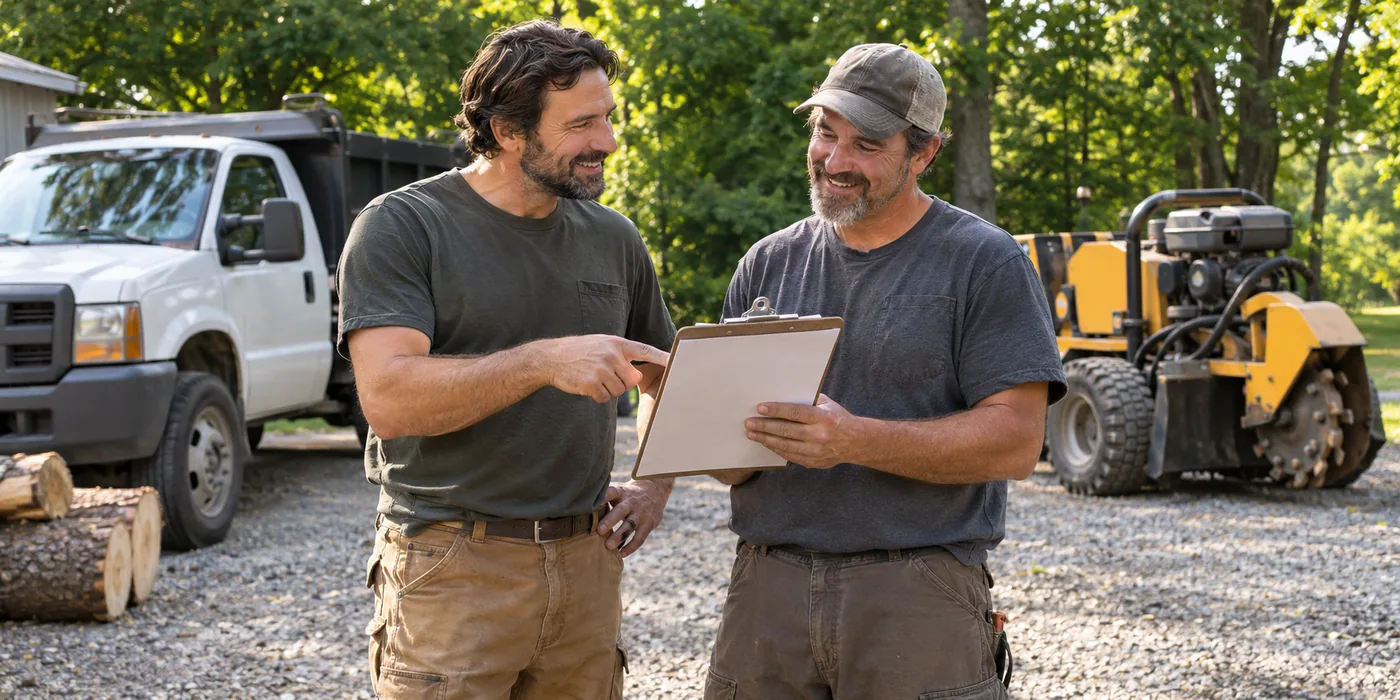
A Nearby Crew May Be A Good Connection
Think about the last tree job you turned down. Maybe it needed a machine you do not own. Maybe the address was too far away. The caller still needed help, even though your crew could not take the work. Knowing another tree company could have given you a useful next step to offer.
Other tree companies may run into the same problem. A crew that handles large removals might get calls for small pruning jobs. A company across town might hear from someone near your shop. A referral relationship starts when two owners learn which jobs fit each business and feel comfortable making an introduction.
Look For Skills That Add To Yours
Start with the requests your team often passes up. If you remove trees but do not grind stumps, look for a company that handles stump work. If customers ask about a sick tree, a qualified arborist who offers assessments may be a useful contact. Our guide to choosing between a tree service and an arborist explains how those roles can differ.
Make a short list of gaps, then look for businesses that fit them. Ask what each crew does often, which areas it serves, and what work it declines. Equipment alone does not tell the whole story. You want to know whether the people using it have experience with the kind of job you may send.
For example, a stump crew might hear from a homeowner whose tree is still standing. That crew could suggest a removal company it knows. Later, the removal company may hear from someone with an old stump. Each owner has a useful contact for work outside their usual jobs. Neither needs to buy a machine just to answer that request.
Start With A Simple Owner To Owner Call
Choose one or two companies to contact first. A short call might sound like this: “We handle removals on the west side, but we get stump requests we cannot take. Do you accept those jobs on their own? I would like to learn about your work so I can give callers a useful option.” Keep the first talk clear and friendly.
Ask who should receive a referral and how they prefer to hear about it. Find out whether they want the customer to call directly. Offer the same details about your company. There is no need to promise an equal number of jobs in return. A good introduction should fit the customer's need each time.
Learn About The Company Before Recommending It
Take time to review the business before putting your name behind a recommendation. Ask about similar jobs, current insurance, and training that fits the work. Speak with past customers when possible. Pay attention to how the owner answers questions and follows up. Those first talks can help you decide whether to learn more or keep looking.
A company page gives you a starting point. For example, Joplin Tree Care's EasySpruce profile lists removal, trimming, stump grinding, storm cleanup, and land clearing. Those details help frame questions about job fit. They do not establish a referral partnership or confirm that a crew can take a certain job. Contact the business to check.
Be Clear About The Work Being Passed Along
Picture a removal company referring a customer to a separate stump crew. The customer needs to know where the first job ends. Will the removal crew leave the stump? Who will quote grinding, remove chips, and discuss access? Our older guide to how stump grinding works and when it makes sense can help explain that separate step.
Make clear whether you are giving the customer another company's contact details or hiring that company to do part of your own job. Those are different setups. For a direct referral, explain that the customer will speak with the other business about its own estimate and work. Leave promises about price, dates, and results to that business.
Make The Introduction Easy For Everyone
Ask the customer before sharing their name, phone number, address, or job photos. You can also give them the other company's public contact details and let them make the call. If they want an introduction, share only what they agreed to pass along. Explain what you know about the request and what still needs a site visit.
A brief message can be enough: “With your permission, I have copied Jordan from the stump company. You asked about grinding the oak stump after our removal. Jordan will contact you about access, a separate quote, and timing.” Use real names and confirmed details. Never promise another crew's arrival before that crew has agreed.
Build Trust Without Keeping Score
Follow up with your contact after an introduction to learn whether the request fit. A quick “Was that the kind of stump job you take?” can improve the next handoff. Keep simple notes on the service requested and which company you suggested. If a customer raises a concern, listen and review the relationship before sending more people.
Send work because the company may suit the job. Avoid treating referrals as a debt another owner must repay. Each business should set its own prices and decide which work to accept. Customers should stay free to compare companies. A steady relationship grows from helpful introductions and honest replies, even when work does not flow equally in both directions.
Give Other Crews A Way To Learn About You
Make your own company easy to check before you reach out. Keep your services, coverage, phone number, and homepage current. Our guide to sharing your tree service company with local contacts explains how a clear company page can support an introduction. Send that page when another owner asks what your crew handles.
You can submit your tree service company to EasySpruce for review so potential customers and fellow business owners have another place to learn about it. A listing does not promise referral partners or jobs. It gives you a useful page to share while you do the personal work: meet other owners, learn their strengths, and offer help when a job fits.